 Breaking News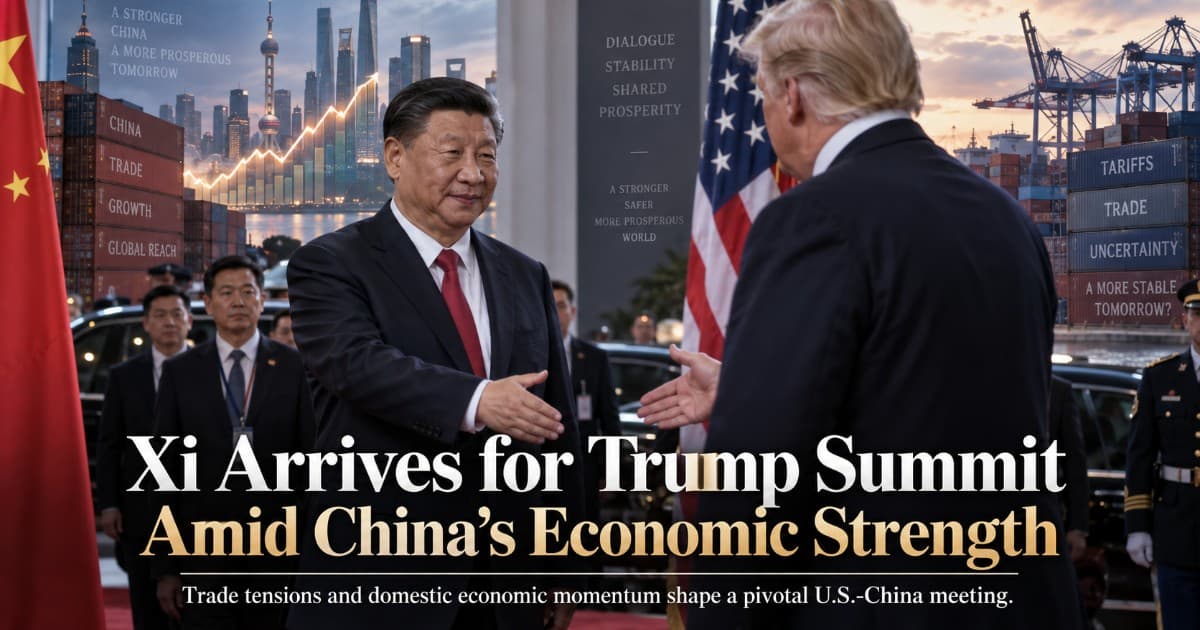
Breaking News
Xi Arrives at Trump Summit as China's Economy Shows Signs of Momentum
By The Daily Ledger1 min read7 views
Chinese President Xi Jinping has arrived at a summit with President Trump as economic data suggests strength in China's major industries, potentially shaping…
Chinese President Xi Jinping has arrived at a summit with U.S. President Donald Trump as economic indicators suggest momentum in China's major industries, a development that may influence the trajectory of high-stakes trade discussions between the world's two largest economies.
The timing of the meeting coincides with reports of activity in China's manufacturing sector and export markets, suggesting the country's economy maintains relative strength despite ongoing uncertainties in the global economy. China's industrial performance has long been a factor in bilateral trade negotiations, as exports form a significant portion of the nation's economic output.
Trade relations between the United States and China have been a persistent point of friction, marked by disputes over tariffs, intellectual property protections, and access to markets. Previous administrations have imposed tariffs on Chinese goods, while Beijing has retaliated with its own measures. These conflicts have reverberated through supply chains worldwide and affected prices for American consumers and businesses.
The summit represents an opportunity for both nations to address these long-standing tensions. The Trump administration has historically taken a harder line on trade deficits and manufacturing competition, while China has sought to protect its economic interests and maintain access to American markets for its exports.
Economic strength in China's export-dependent sectors could provide the country with negotiating leverage, as a robust trade engine suggests Beijing has less incentive to make significant concessions. Conversely, weakness would underscore the mutual costs of continued trade friction.
Observers will be watching for signals on whether the two leaders will pursue new trade agreements, revisit existing arrangements, or maintain the current framework of tensions and tariffs. The outcome could reshape the competitive landscape for businesses operating across both economies and influence consumer costs in the United States.

Comments (0)
No comments yet. Be the first to share your thoughts.
Leave a comment
Comments are reviewed before they appear.