 Breaking News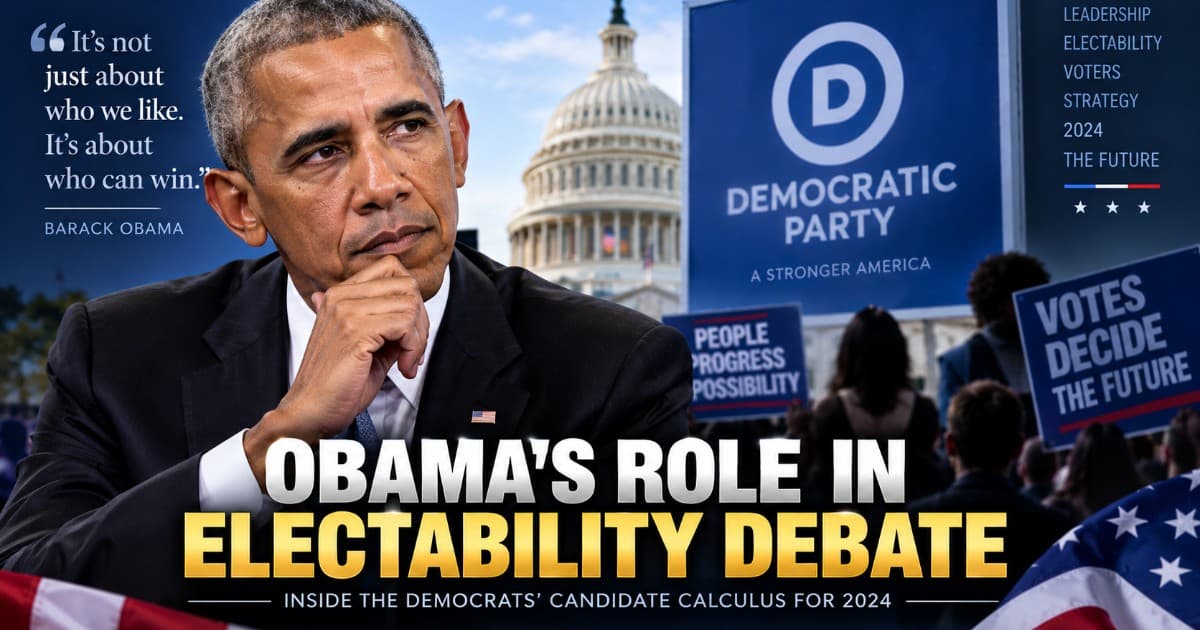
Breaking News
How the 'Electability' Argument Shaped Democratic Strategy
By The Daily Ledger2 min read10 views
Recent debate over candidate selection has raised questions about how Democratic leaders evaluate electability—and whether those calculations actually predict…
The question of which candidate can best defeat an incumbent—or win a general election—has become a central point of contention within the Democratic Party. This concept, often referred to as electability, drives significant decisions about endorsements, fundraising, and media attention, yet its definition remains fluid and often divorced from measurable indicators.
Electability as a political measure has always relied heavily on subjective judgment. Party insiders, prominent figures, and analysts make calculations about which candidates will appeal to swing voters, turn out the base, or perform well in key regions. These assessments shape the landscape long before voters cast their first ballots, influencing who receives coverage, financial backing, and perceived momentum.
The tension emerges when these elite assessments diverge from what voters themselves indicate. Polling data, early primary results, and enthusiasm among the electorate may suggest one candidate is more viable, while party leaders and media commentators advocate for another based on demographic analysis or strategic hunches. This gap raises fundamental questions about who should determine a candidate's viability and how much weight establishment opinion should carry in a democratic process.
Recent political cycles have highlighted this disconnect. Candidates deemed less electable by establishment figures have sometimes outperformed expectations, while those backed as inevitable choices have faltered. These surprises suggest that calculations of electability may incorporate biases—toward certain demographics, geographic regions, or political backgrounds—that do not necessarily reflect broader electorate preferences.
The concern extends beyond candidate selection. When electability arguments dominate primary discourse, they can suppress discussion of policy positions, governance vision, or leadership qualities. They may also discourage voters who favor certain candidates from fully supporting eventual nominees chosen largely on electability grounds, affecting general election turnout and enthusiasm.
As Democrats continue to evaluate candidates and strategy, the underlying question persists: what does electability truly measure, who should assess it, and how much should it matter in a system designed to let voters decide?

Comments (0)
No comments yet. Be the first to share your thoughts.
Leave a comment
Comments are reviewed before they appear.