 Breaking News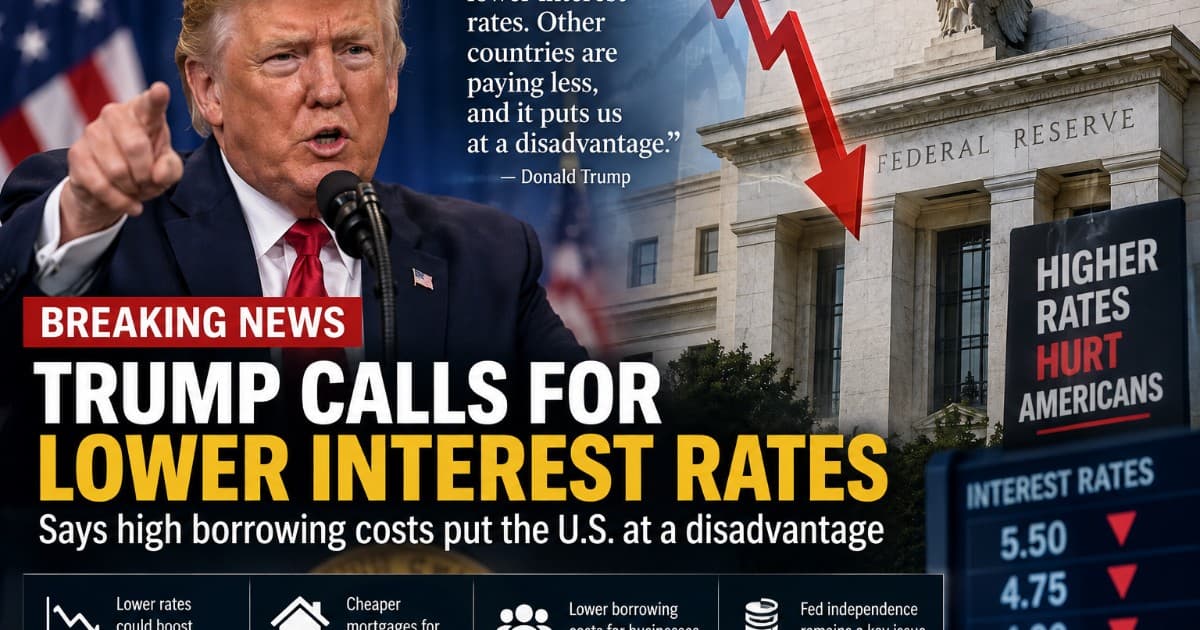
Breaking News
Trump Renews Push for Lower Interest Rates, Citing Global Competitive Pressure on US Economy
By The Daily Ledger2 min read6 views
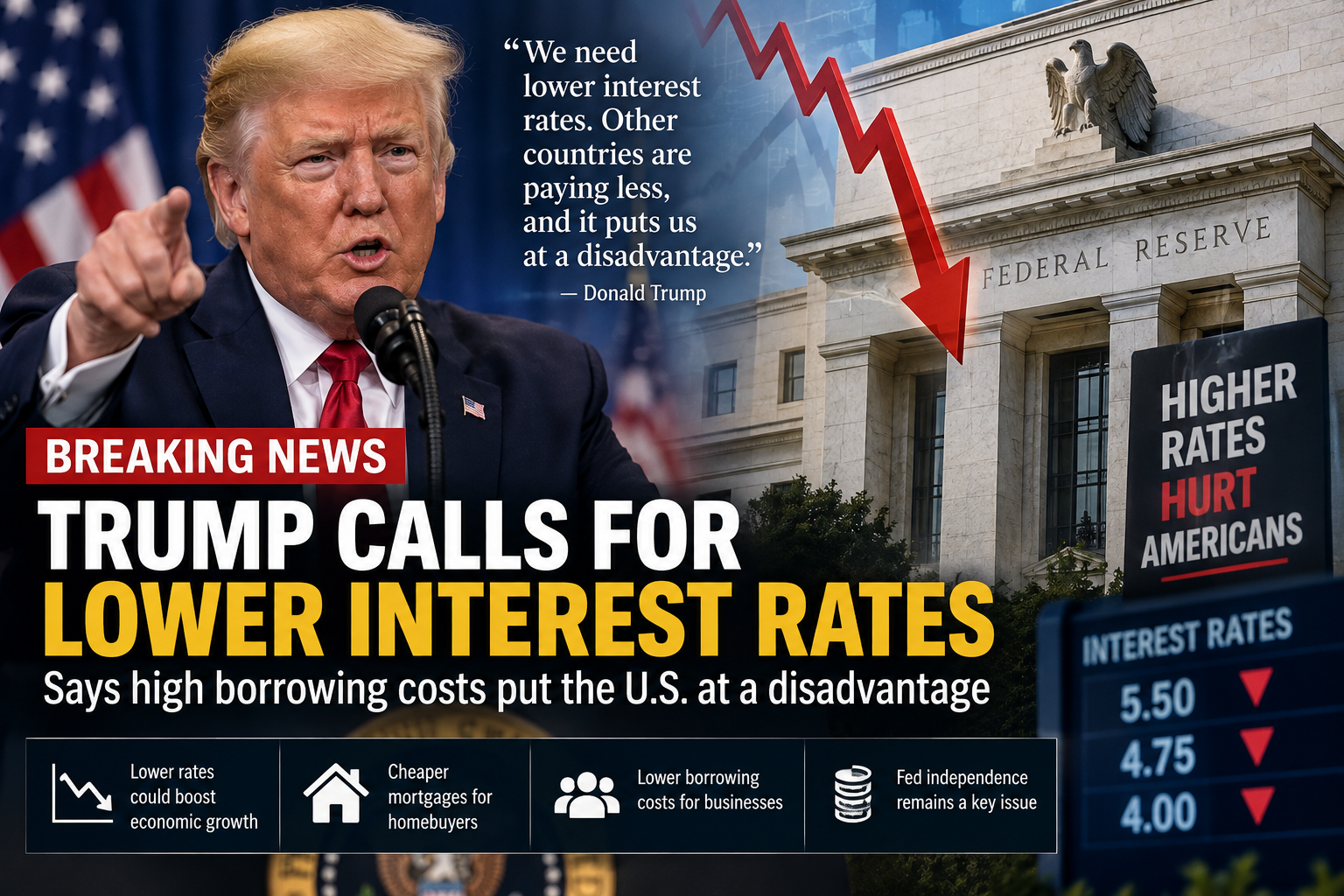
Donald Trump called for lower interest rates, arguing that high borrowing costs put the United States at a competitive disadvantage against other economies.
Trump Calls for Lower Interest Rates, Warns of 'Unfair Disadvantage' for US
President Donald Trump renewed his calls for lower interest rates, arguing that elevated borrowing costs are undermining the United States' position in the global economy. Trump framed the issue in competitive terms, suggesting that high rates amount to an unfair disadvantage at a time when the administration is focused on reshaping American trade and economic relationships.
The remarks follow a well-established pattern from Trump, who throughout his political career has been unusually vocal in publicly pressing for looser monetary policy — a stance that puts him at odds with the conventional norm of presidents staying silent on Federal Reserve decisions to preserve the central bank's independence.
The Federal Reserve, which sets benchmark interest rates through its Federal Open Market Committee, has maintained relatively elevated rates in recent years after a sustained campaign to bring inflation down from multi-decade highs reached earlier this decade. Fed officials have signaled that any future rate reductions will depend on continued progress toward their inflation target and conditions in the labor market, rather than on political timelines.
Trump's framing centers on international competitiveness. When borrowing costs in the United States are higher than in peer economies, the argument goes, American businesses face steeper financing costs and the dollar can strengthen in ways that make US exports more expensive abroad. Whether those dynamics constitute an "unfair" disadvantage in any formal sense is disputed among economists, but the political argument is designed to resonate with manufacturers and industries sensitive to exchange rates and capital costs.
The call for rate cuts also carries a fiscal dimension. With the federal government carrying a substantial national debt, lower interest rates would reduce the cost of servicing that debt — a consideration that adds a governmental, not just economic, motive to the push.
For ordinary Americans, the stakes are concrete. Mortgage rates, auto loans, and credit card borrowing costs all move broadly in relation to the Fed's benchmark rate. A sustained period of high rates has squeezed homebuyers and small business owners, giving Trump's remarks a potential resonance with voters who have felt the pinch of expensive credit.
Federal Reserve independence has long been treated as a cornerstone of stable monetary policy, with the understanding that removing political pressure from rate-setting decisions allows the central bank to make choices based on economic data rather than electoral cycles. Critics of Trump's approach warn that sustained public pressure from the White House — regardless of whether it directly influences Fed decisions — can erode confidence in that independence among investors and foreign governments.
The Fed has not publicly commented on Trump's latest remarks. The central bank's next scheduled policy meeting will give markets an opportunity to assess whether the political environment is affecting its deliberations.

Comments (0)
No comments yet. Be the first to share your thoughts.
Leave a comment
Comments are reviewed before they appear.