 Breaking News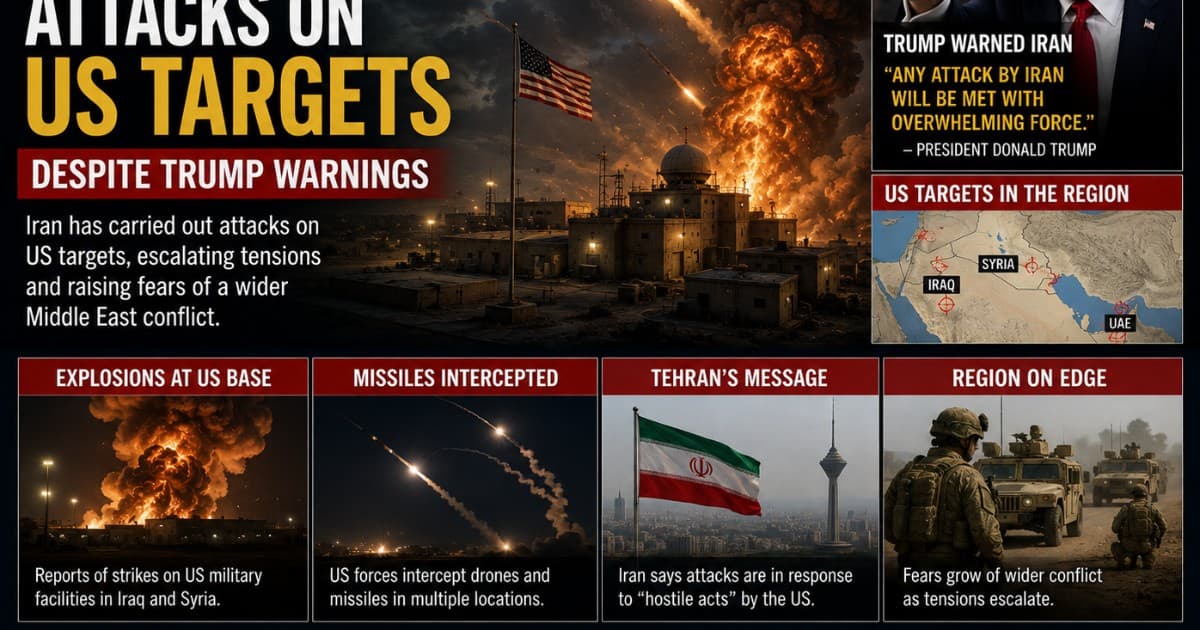
Breaking News
Iran Strikes US Targets in Direct Defiance of Trump's Warnings
By The Daily Ledger2 min read19 views
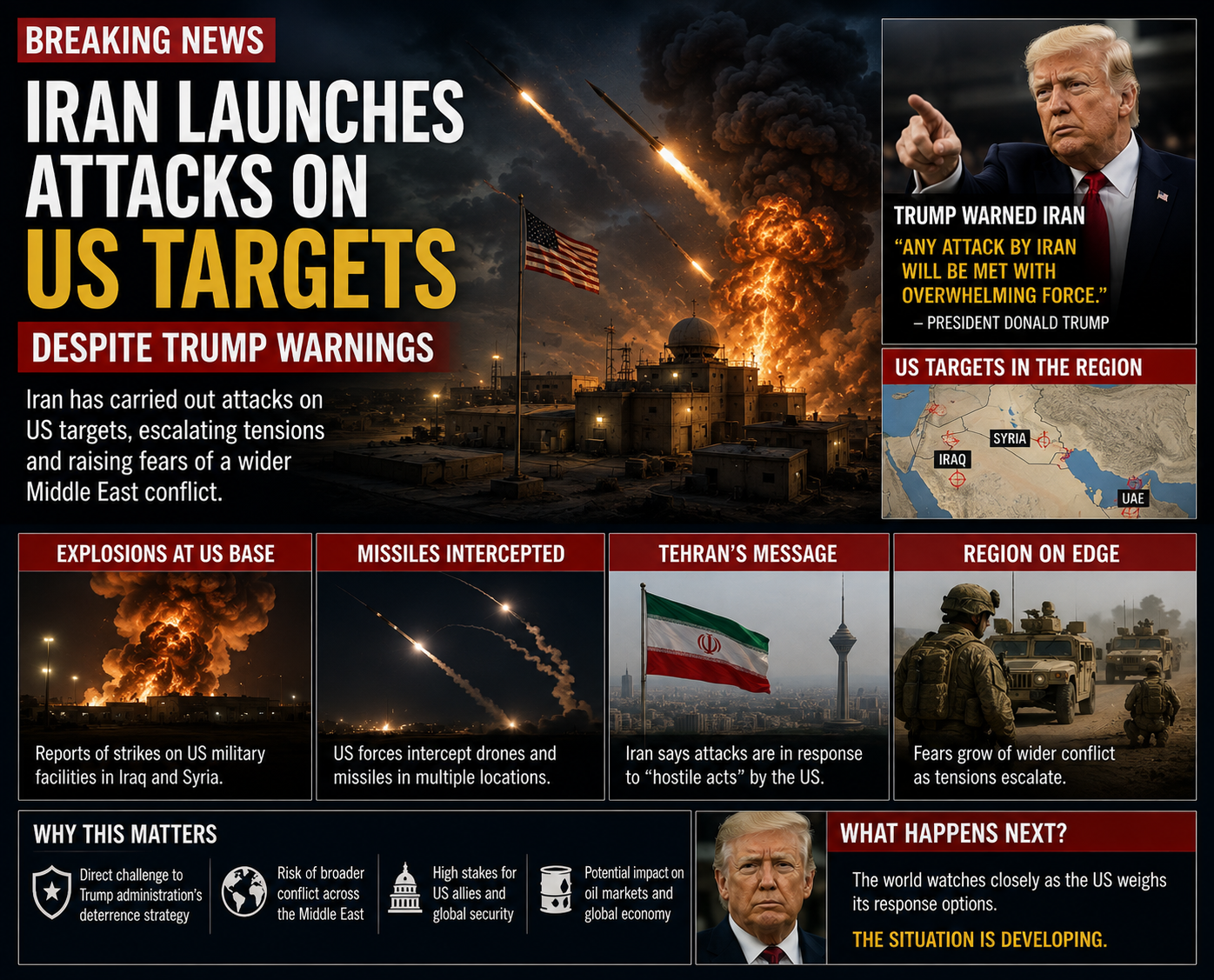
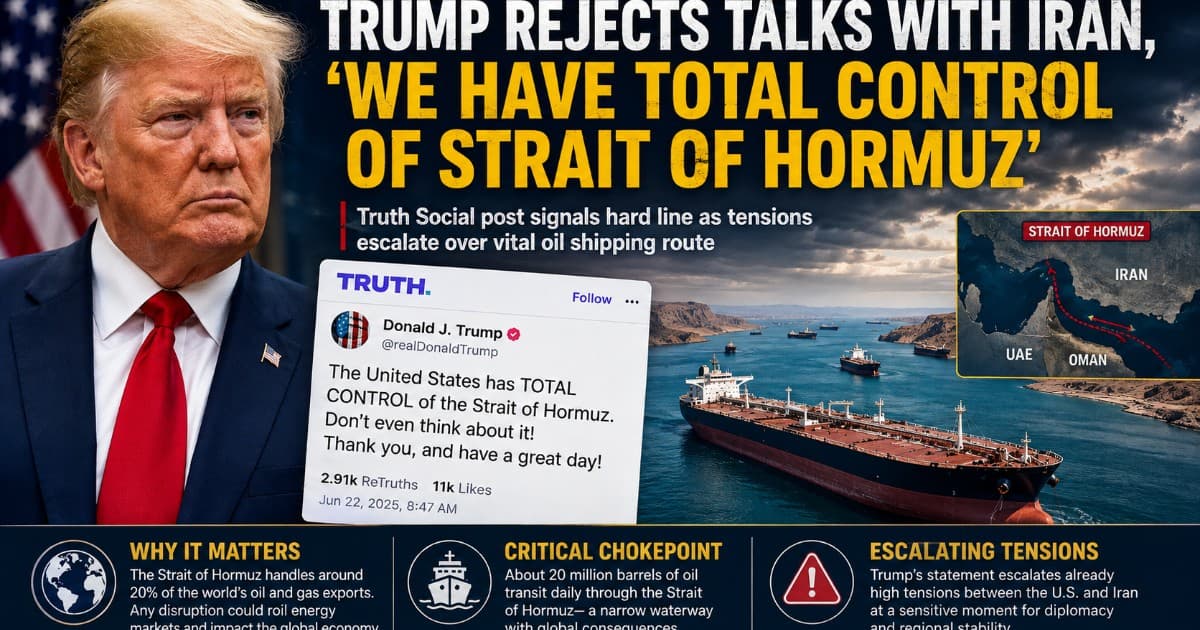
Iran has carried out attacks on US targets despite explicit warnings from President Trump, marking a sharp escalation in tensions between Washington and Tehran.
Iran Attacks US Targets Despite Trump Threats
Iran has carried out attacks on United States targets, pressing ahead in apparent defiance of explicit warnings issued by President Donald Trump, in a development that marks one of the sharpest escalations between Washington and Tehran in recent years.
The strikes represent a direct challenge to the Trump administration's effort to reassert deterrence against Iran through a posture of maximum pressure. Trump had publicly warned Tehran against taking hostile action toward American personnel or interests, framing any such move as carrying severe consequences. The attacks suggest those warnings did not produce the restraint the administration sought.
Details of the specific targets and the scale of the strikes are still emerging. Iran has historically carried out operations against US assets both directly and through a network of allied militia groups operating across Iraq, Syria, and the wider Middle East. The question of whether Tehran acted through proxy forces or with a more direct hand carries significant implications for how the United States is expected to respond.
The White House and the Pentagon moved quickly to address the situation, with officials weighing a response that would signal resolve without triggering a broader regional conflict. Trump, who built much of his foreign policy reputation in his first term on a willingness to take aggressive action — including the strike that killed a senior Iranian military commander in 2020 — faces pressure to demonstrate that his threats carry weight.
Iran, for its part, has long maintained that it will not be dictated to by Washington and has repeatedly signaled its willingness to absorb pressure while retaining the capacity to strike back. Iranian officials have framed their country's military posture as defensive, even as Western governments characterize many of its actions as destabilizing.
The timing of the attacks adds complexity to already fraught diplomatic dynamics. The Trump administration has pursued a dual-track approach of threatening severe economic and military consequences while leaving open, at least nominally, a path to negotiations over Iran's nuclear activities. Analysts warn that a significant military exchange could close off whatever diplomatic space remains.
Regional governments and US allies are closely monitoring the situation, concerned that an unchecked escalation between two heavily armed adversaries could draw in other actors and destabilize a Middle East already contending with multiple active conflict zones.
Congress is expected to seek briefings from administration officials, with members of both parties expressing concern about the safety of American military personnel stationed across the region and demanding clarity on what steps the executive branch intends to take.
Comments (0)
No comments yet. Be the first to share your thoughts.
Leave a comment
Comments are reviewed before they appear.