 Breaking News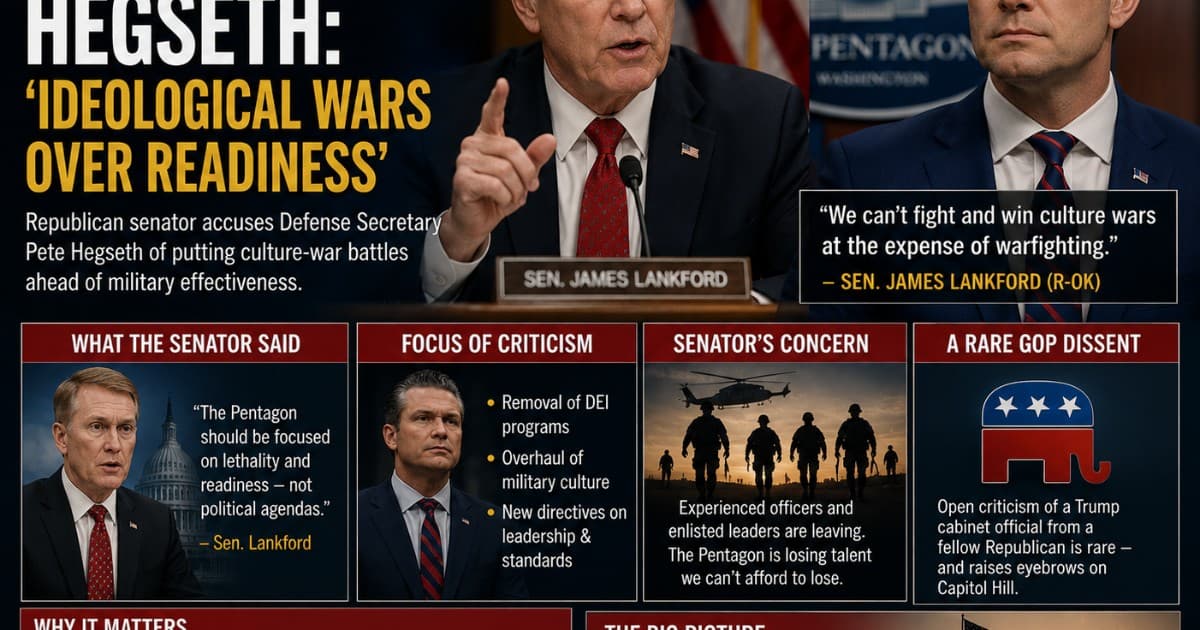
Breaking News
Republican Senator Breaks with Trump, Warns Hegseth's Pentagon Agenda Is Hollowing Out the Military
By The Daily Ledger2 min read15 views
A Republican senator is warning that Defense Secretary Pete Hegseth's ideological agenda is undermining military readiness by pushing experienced personnel out…
GOP Senator Accuses Hegseth of Stoking Culture Wars While Draining Military Ranks
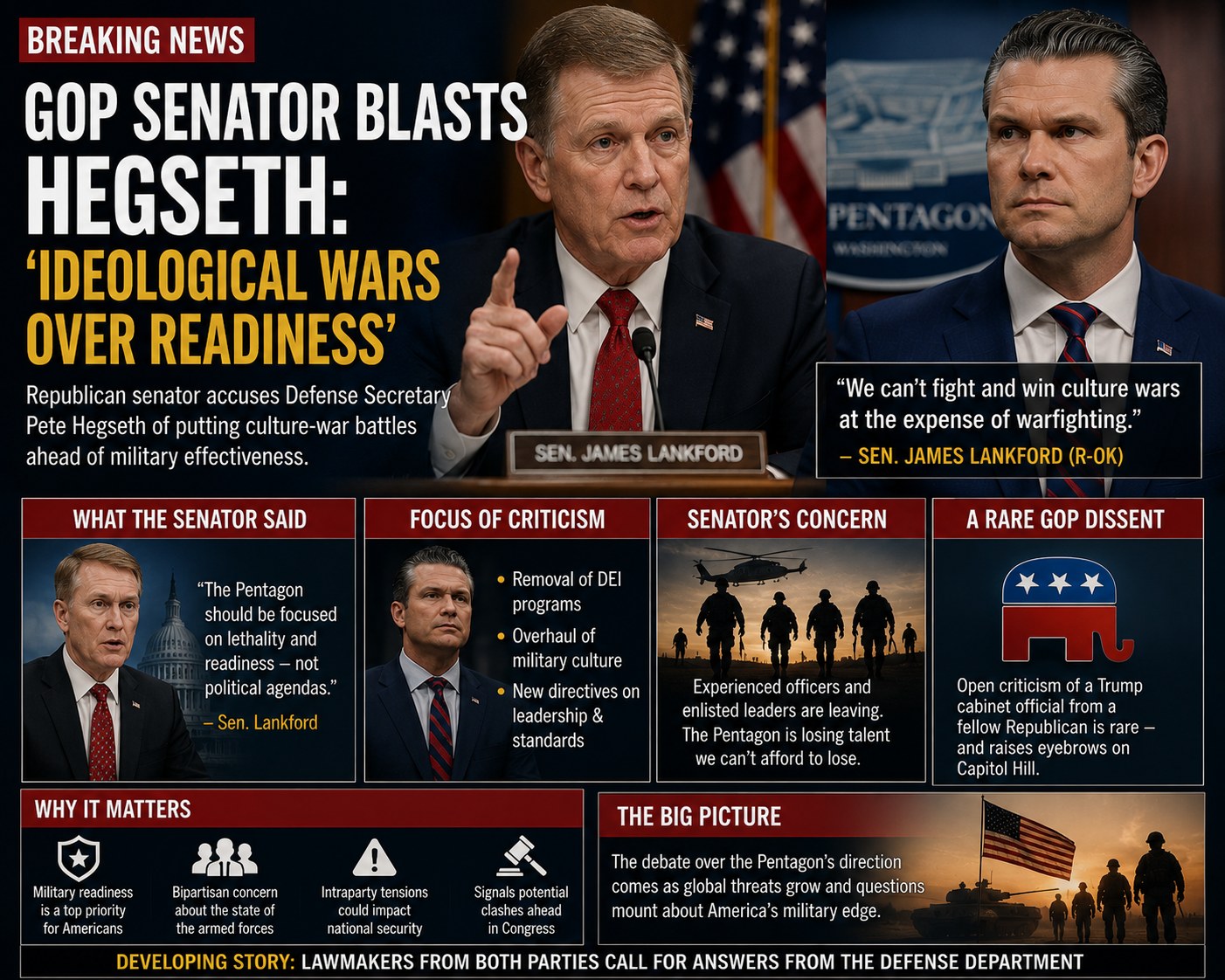
A Republican senator has broken publicly with Defense Secretary Pete Hegseth, accusing him of allowing ideological priorities to erode military readiness at a time when the United States faces a complex global security environment. The criticism, notable for coming from within the president's own party, reflects growing unease among some lawmakers about the pace and nature of changes underway at the Pentagon.
The senator argued that Hegseth's aggressive campaign to reshape military culture — centered on dismantling diversity and inclusion programs and removing officials viewed as obstacles to the administration's agenda — has driven out experienced personnel the armed forces can ill afford to lose. The accusation cuts to a tension that has shadowed Hegseth's tenure since he was confirmed by the narrowest of margins earlier this year: whether the administration's ideological ambitions are compatible with maintaining a ready and capable fighting force.
Hegseth, a former television host and Army National Guard veteran, has made the elimination of what he calls Pentagon bureaucracy and political correctness a centerpiece of his leadership. Supporters argue the changes are long overdue, restoring a focus on warfighting merit over institutional politics. But the personnel turbulence that has accompanied those changes — including the departure of senior military officers and experienced civilian staff — has alarmed a segment of defense-minded lawmakers on both sides of the aisle.
The Republican senator's public rebuke underscores how the military readiness question carries particular weight with GOP lawmakers who have traditionally defined themselves by strong national defense credentials. Accusing a fellow Republican's cabinet pick of weakening the military is a politically significant step, and one that suggests the concerns have moved beyond private conversations in congressional hallways.
The Pentagon has maintained that the changes underway are necessary to sharpen the military's focus and eliminate programs that detracted from combat effectiveness. The White House has shown little inclination to slow the pace of Hegseth's restructuring efforts.
For critics, the deeper worry is not any single policy change but an accumulating effect: that months of institutional disruption, high-profile dismissals, and public controversy are making military service less attractive to the experienced professionals the armed forces depend on for leadership and institutional knowledge. Recruitment and retention have been persistent challenges for the military in recent years, and some defense analysts warn that a politically charged environment at the top of the chain of command risks compounding those difficulties.
The dispute sets the stage for potentially contentious oversight hearings as Congress works through defense authorization and appropriations, with at least one member of the president's party now on record questioning whether the Pentagon's current course serves the national interest.


Comments (0)
No comments yet. Be the first to share your thoughts.
Leave a comment
Comments are reviewed before they appear.