 Breaking News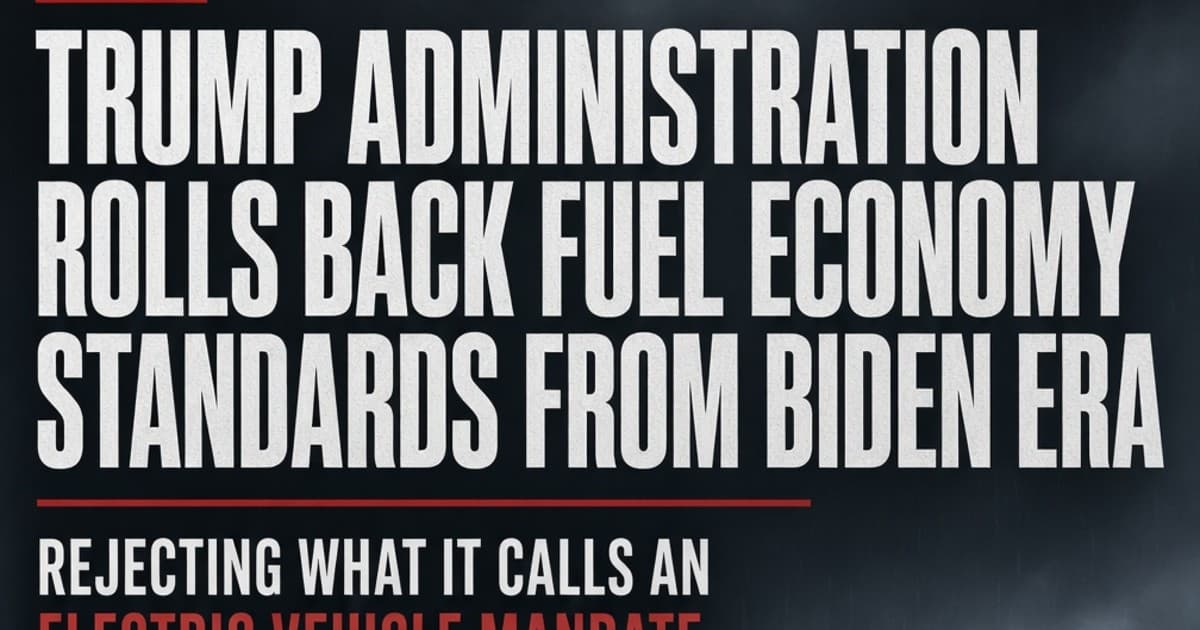
Breaking News
Trump Administration Reverses Biden Fuel Economy Standards, Scales Back EV Regulations
By The Daily Ledger2 min read1 views
The Trump administration has announced the reversal of fuel efficiency standards from the Biden era, signaling a major shift in federal automotive regulation…
The Trump administration has announced a significant reversal of automotive fuel economy standards established during the previous administration, marking one of the most consequential shifts in federal transportation policy in recent years.
The move centers on repealing requirements that were designed to progressively tighten fuel efficiency benchmarks and encourage the development of electric vehicles. Administration officials have characterized the earlier standards as a mandate that constrained consumer choice and imposed costly requirements on manufacturers.
The reversal represents a fundamental change in regulatory approach. Where the Biden-era framework set escalating targets for reducing fleet-wide emissions through electrification and efficiency improvements, the new policy takes a different stance on how the automotive industry should balance environmental concerns with manufacturing flexibility and vehicle affordability.
Automotive manufacturers face significant implications from the shift. Companies that had invested substantially in electric vehicle production and retooled factories to meet the stricter standards now operate in a changed regulatory environment. The decision affects not only long-term vehicle development strategies but also current production decisions and capital investments.
The regulatory change also intersects with broader questions about federal versus state authority. Several states, including California, maintain their own emissions standards that are sometimes stricter than federal requirements. The interplay between federal rollback and state regulations remains a key area of uncertainty for the industry.
The administration's position emphasizes that the reversal supports American manufacturing and protects consumer access to affordable vehicles. Supporters argue that reducing regulatory burdens encourages competition and innovation without mandates.
Opponents of the rollback raise concerns about long-term fuel costs for consumers, environmental consequences, and whether the change undermines domestic automakers' competitive position in a global market increasingly focused on vehicle electrification.
The practical effects of the reversal will become clearer as the administration issues detailed guidance on implementation and the automotive industry responds with updated production and investment plans.


Comments (0)
No comments yet. Be the first to share your thoughts.
Leave a comment
Comments are reviewed before they appear.