 World
World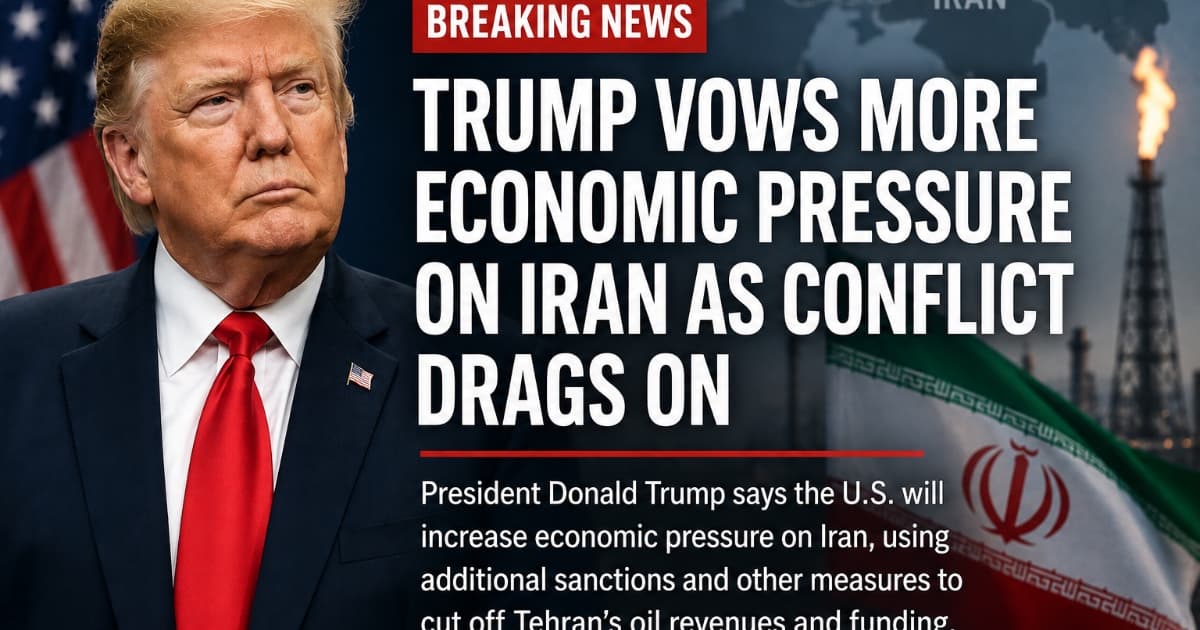
World
Trump Vows More Economic Pressure on Iran as Oil and Gold Markets Brace for Volatility
By The Daily Ledger6 min read26 views
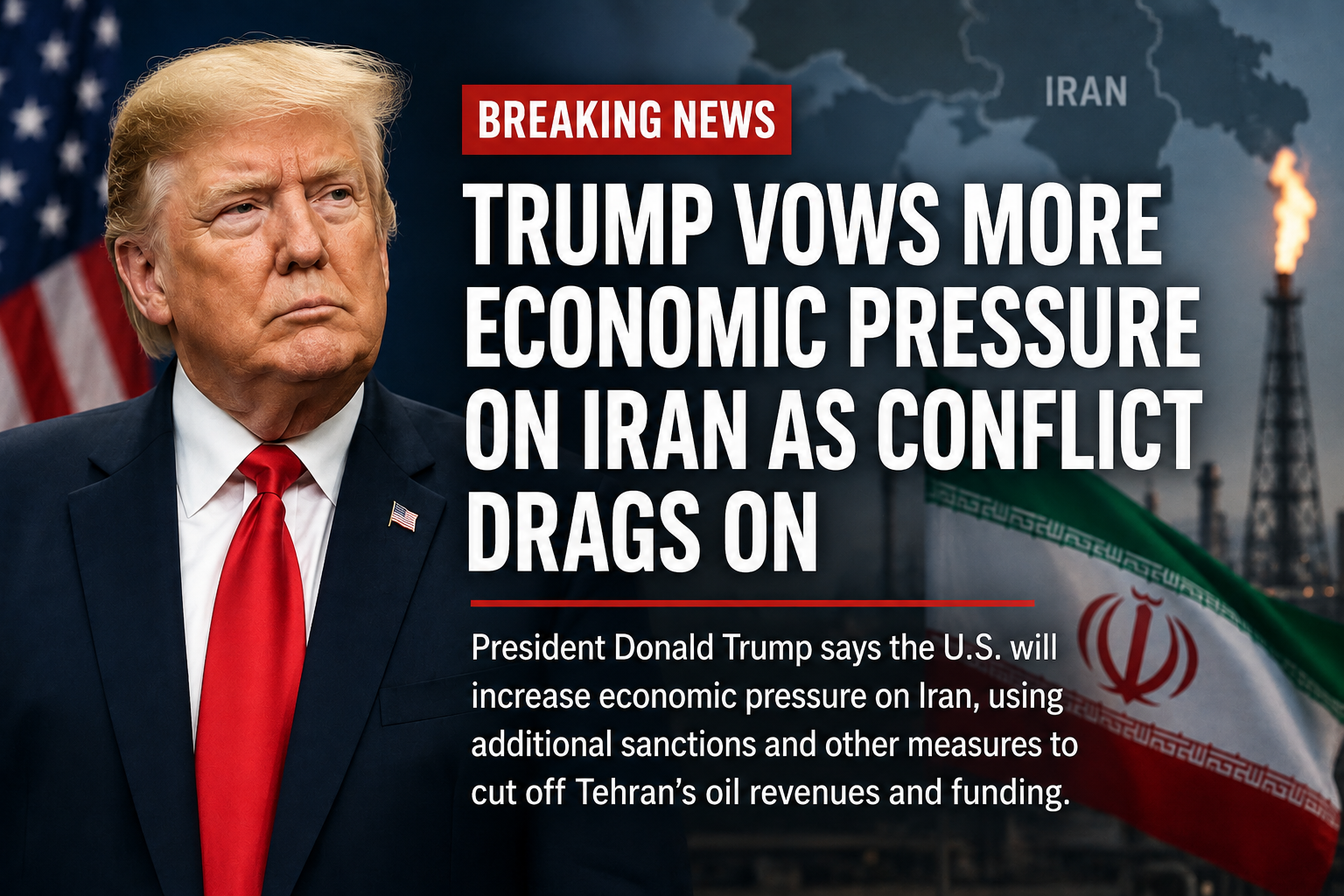
President Donald Trump is signaling greater economic pressure on Iran as U.S.-Iran tensions persist, putting oil, gold and global markets on alert as shipping through the Strait of Hormuz slows and hopes for a diplomatic breakthrough fade.
Trump Vows More Economic Pressure on Iran as Oil and Gold Markets Brace for Volatility
President Donald Trump is signaling that the United States could intensify economic pressure on Iran, adding another layer of uncertainty to a conflict already affecting global energy markets.
The development is becoming increasingly important for traders because tensions surrounding Iran are no longer confined to geopolitics.
They are affecting oil supplies, shipping, gasoline prices, inflation expectations and global financial markets.
Reuters reported on August 16 that the Trump administration has several potential avenues for increasing economic pressure on Tehran, including additional sanctions aimed at Iran’s oil revenues and entities facilitating Iranian trade.
Meanwhile, oil markets began the new week under renewed pressure from geopolitical uncertainty.
On Monday, August 17, oil prices rose as expectations of a quick U.S.-Iran diplomatic breakthrough weakened and tanker traffic through the strategically important Strait of Hormuz slowed.
For traders, the situation creates potential volatility across crude oil, XAU/USD, the U.S. dollar, Treasury yields and global equities.
Why the Strait of Hormuz Matters
The Strait of Hormuz is one of the world’s most important energy transportation routes.
Any significant disruption to shipping through the waterway can immediately raise concerns about global oil supplies.
Recent developments have therefore attracted considerable attention from energy traders.
Reuters reported that tanker traffic through Hormuz had slowed following reports of attacks on vessels, while Washington warned that it could increase economic pressure on Tehran.
If shipping disruptions worsen, markets could begin pricing a larger geopolitical risk premium into crude oil.
That would potentially push energy prices higher.
Trump Signals Greater Economic Pressure
Trump has increasingly emphasized economic pressure as part of Washington’s strategy toward Iran.
The United States already maintains extensive sanctions against Tehran, including restrictions targeting its energy and financial sectors.
According to Reuters, additional options could include further action against companies and financial institutions involved in Iranian oil transactions.
Chinese refiners and financial institutions involved in processing Iranian transactions could become particularly important if Washington expands secondary sanctions.
The objective would be straightforward:
reduce Iran’s ability to generate revenue from international trade.
But stronger enforcement could also affect global energy supplies.
That is why financial markets are watching closely.
Oil Is the First Market to Watch
Crude oil is likely to remain the most directly exposed major asset.
Oil prices moved higher Monday as hopes for progress in U.S.-Iran negotiations weakened.
The market faces two competing scenarios.
Bullish Oil Scenario
Oil could move higher if:
- U.S.-Iran negotiations deteriorate further
- Washington announces stronger sanctions
- Tanker traffic through Hormuz declines
- Additional vessels are attacked
- Iranian oil exports decline
- Markets fear prolonged supply disruptions
Under this scenario, traders could increase the geopolitical risk premium embedded in crude prices.
Bearish Oil Scenario
Oil could fall rapidly if:
- Washington and Tehran restart serious negotiations
- A ceasefire becomes more likely
- Hormuz shipping returns toward normal
- Sanctions pressure is reduced
- Traders believe supply disruptions will be temporary
Recent market behavior has already demonstrated how sensitive crude prices are to changes in expectations surrounding the conflict.
Trump Tells Americans to Accept Higher Gasoline Prices
The political consequences are also becoming more significant.
Trump recently urged Americans to accept somewhat higher gasoline prices while the confrontation with Iran continues.
That matters because higher crude prices eventually affect transportation and consumer costs.
U.S. gasoline prices have already experienced substantial pressure during the conflict.
If oil remains elevated, American households could continue paying more at the pump.
That creates another issue for markets:
inflation.
Higher Oil Could Complicate the Federal Reserve Outlook
Energy prices feed into inflation both directly and indirectly.
Higher gasoline prices increase household expenses.
Higher diesel and transportation costs can also increase the cost of moving goods throughout the economy.
If oil remains elevated for an extended period, investors could become more concerned about persistent inflation.
That could influence expectations for Federal Reserve interest rates.
The chain traders should monitor is:
Iran escalation → Oil rises → Inflation risk rises → Fed expectations change → Dollar and Treasury yields react.
Those moves can then influence gold and equities.
What Does This Mean for Gold?
Gold traders should pay particularly close attention.
Geopolitical conflicts traditionally increase interest in safe-haven assets.
An escalation involving Iran could therefore support XAU/USD.
But gold’s reaction is more complicated than simply buying whenever geopolitical tensions increase.
Higher oil prices can also increase inflation expectations.
If that pushes U.S. Treasury yields and the dollar significantly higher, gold could face resistance despite safe-haven demand.
Traders should therefore watch several confirmation signals.
Potential Bullish Gold Confirmation
Gold could receive stronger support if:
- Middle East tensions escalate
- Oil prices rise sharply
- Investors move toward safe havens
- U.S. equities weaken
- DXY declines
- Treasury yields fall
- XAU/USD breaks technical resistance
Potential Bearish Gold Confirmation
Gold could struggle if:
- U.S.-Iran negotiations improve
- Geopolitical risk declines
- DXY strengthens significantly
- Treasury yields rise
- Safe-haven demand weakens
The strongest gold setup would therefore come from combining geopolitical developments with confirmation from the dollar and bond markets.
Stock Markets Face Another Inflation Risk
Equity investors also have reason to monitor the situation.
Persistently high oil prices can increase operating costs for businesses and reduce consumers’ disposable income.
Airlines, transportation companies and other energy-intensive industries can be particularly vulnerable.
Energy producers, however, may benefit from higher crude prices.
The broader market reaction will depend heavily on whether investors see the Iran situation as a temporary disruption or a prolonged inflationary shock.
Markets Are Already Reacting
The geopolitical risk is visible in current market pricing.
Reuters reported on August 17 that Brent crude was around $88.50 per barrel, while U.S. crude was around $82.12 as investors continued monitoring Middle East developments.
Asian equity markets were comparatively subdued, while gold held relatively steady following gains during the previous week.
That suggests investors are watching developments carefully without fully committing to one directional scenario.
A major announcement from Washington or Tehran could change that quickly.
What Traders Should Watch Next
The most important developments now include:
- New Trump statements regarding Iran
- Additional U.S. sanctions
- U.S.-Iran negotiations
- Strait of Hormuz tanker traffic
- Attacks on commercial vessels
- Iranian oil exports
- Brent and WTI crude prices
- U.S. gasoline prices
- XAU/USD
- U.S. Dollar Index
- Treasury yields
- U.S. stock futures
These markets can help determine whether geopolitical developments are becoming a broader financial-market shock.
Trading Outlook
The current environment favors caution rather than predicting direction from a single headline.
For oil, continued deterioration in U.S.-Iran relations combined with further shipping disruptions would generally strengthen the bullish case.
For gold, geopolitical escalation can be supportive, but confirmation from DXY and Treasury yields remains important.
For stocks, a prolonged surge in energy prices would increase concerns about inflation and corporate costs.
Traders should also remain prepared for sharp reversals.
Any credible announcement of renewed negotiations, a ceasefire or an agreement concerning the Strait of Hormuz could quickly remove part of the geopolitical premium currently supporting oil.
Bottom Line
Trump’s push for greater economic pressure on Iran is becoming an increasingly important market story.
The combination of U.S. pressure, strained negotiations and disrupted shipping through the Strait of Hormuz creates a potentially volatile environment for global markets.
Oil remains the most directly exposed asset.
But the consequences extend to gold, inflation, Federal Reserve expectations, the dollar, Treasury yields and equities.
For traders, the next major Trump or Iran announcement could become an important catalyst.
Until then, the key markets to monitor are Brent, WTI, XAU/USD, DXY and U.S. Treasury yields.
This article is for informational purposes only and does not constitute financial or investment advice.
#Policy

Comments (0)
No comments yet. Be the first to share your thoughts.
Leave a comment
Comments are reviewed before they appear.