 Breaking News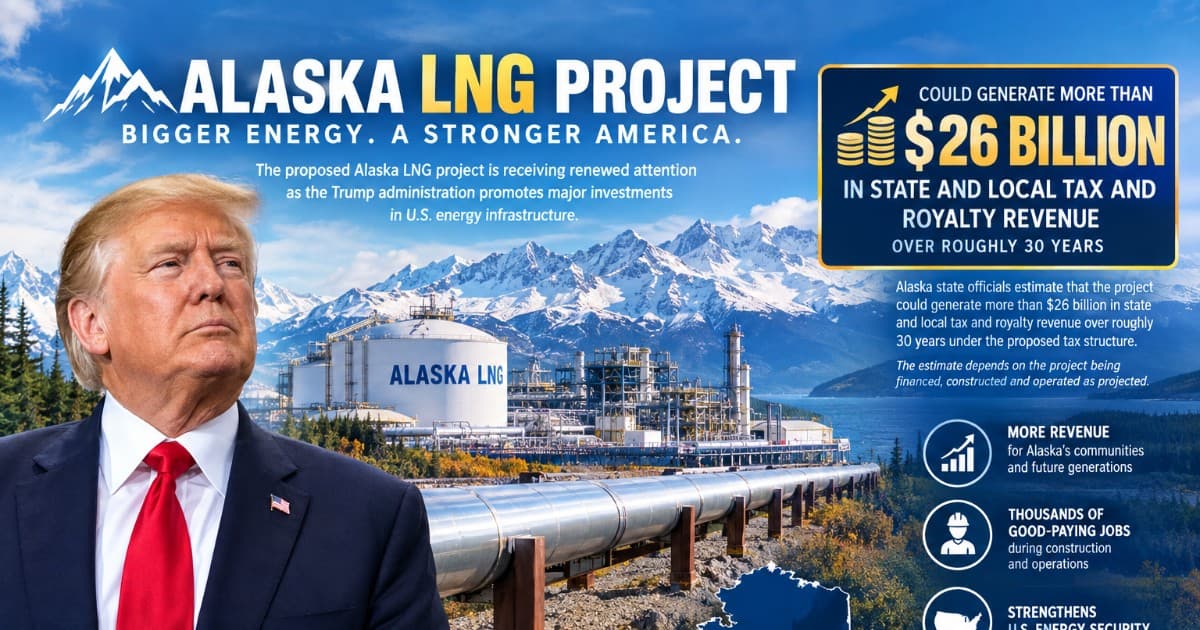
Breaking News
Alaska LNG Project Could Generate More Than $26 Billion in State and Local Revenue Over 30 Years
By The Daily Ledger3 min read8 views
The proposed Alaska LNG project is receiving renewed attention as the Trump administration promotes expanded U.S. energy infrastructure and development in Alaska. Under a proposed tax framework, the Alaska Department of Revenue estimates the project could generate more than $26 billion in state and local tax and royalty revenue over 30 yearsincluding more than $22 billion for the state and nearly $4 billion for local governments. The estimate is contingent on the project securing financing, being constructed, and operating according to the assumptions used in the forecast.
Alaska LNG Project Could Generate More Than $26 Billion in State and Local Revenue Over 30 Years
The proposed Alaska LNG project is receiving renewed attention as the Trump administration promotes investment in U.S. energy infrastructure and Alaska's natural resources.
Under a proposed tax framework, the Alaska Department of Revenue estimates that the project could generate more than $26 billion in combined state and local tax and royalty revenue over approximately 30 years.
The estimate includes more than $22 billion in state revenue and nearly $4 billion for local governments.
A Major Alaska Energy Project
The Alaska LNG project is designed to move natural gas from Alaska's North Slope to markets through a large-scale energy infrastructure system.
The project includes an approximately 807-mile pipeline, a North Slope gas treatment facility and an LNG export terminal at Cook Inlet.
The proposed system would be intended to supply Alaska communities while also allowing natural gas to reach international markets.
$26 Billion Revenue Projection
The Alaska Department of Revenue estimates that the proposed tax structure could generate more than $26 billion in state and local tax and royalty revenue over 30 years.
More than $22 billion of that amount is projected to go to the State of Alaska, while nearly $4 billion could go to local governments.
The figures are projections based on assumptions about the project's financing, construction, production and long-term operation.
They should therefore not be interpreted as guaranteed future revenue.
Changes to the Tax Structure
Alaska officials have been working on changes to the project's tax framework.
The proposed approach would use a volumetric tax based on the amount of natural gas moving through the pipeline rather than relying entirely on the assessed value of the infrastructure.
State officials say the structure is intended to reduce the project's tax burden during its early years, when construction costs are high and revenue has not yet begun.
The framework is also intended to provide investors with greater predictability.
Federal Support
The Trump administration has expressed support for efforts to advance Alaska LNG.
A White House letter issued in May 2026 said that stable and competitive tax policy could improve the project's feasibility, attract private investment and help secure final commitments.
The administration has also identified Alaska LNG as part of a broader effort to expand U.S. energy development and infrastructure.
Potential Economic Impact
Beyond government revenue, Alaska officials and project supporters point to potential employment, construction activity and energy-market benefits.
The project could create construction and long-term operational jobs while expanding infrastructure around Alaska's natural-gas resources.
Officials have also argued that additional access to North Slope gas could help strengthen Alaska's domestic energy supply.
Financing and Construction Remain Important
The projected revenue depends on the project moving forward.
Before the full economic benefits can be realized, the project must secure financing, complete construction and reach commercial operation.
The State of Alaska has been working with private-sector partners and lawmakers to establish a framework intended to make the project more attractive to investors.
Looking Ahead
The Alaska LNG project remains one of the state's largest proposed energy infrastructure developments.
The potential for more than $26 billion in state and local tax and royalty revenue has increased attention on the project's fiscal framework and long-term economic prospects.
However, the projected revenue depends on the project being financed, constructed and operated as anticipated.
Conclusion
Alaska LNG represents a major proposed expansion of the state's natural-gas infrastructure.
Under the proposed tax structure, state officials estimate that the project could generate more than $26 billion in combined state and local tax and royalty revenue over roughly three decades.
Whether those projected benefits are ultimately realized will depend on financing, construction, production and the project's ability to operate according to the assumptions behind the forecast.
#AlaskaLNG #Alaska #Energy #NaturalGas #LNG #USEnergy #EnergyInfrastructure #AmericanEnergy #AlaskaNews #USNews
Related Stories
Breaking News

Comments (0)
No comments yet. Be the first to share your thoughts.
Leave a comment
Comments are reviewed before they appear.