 Breaking News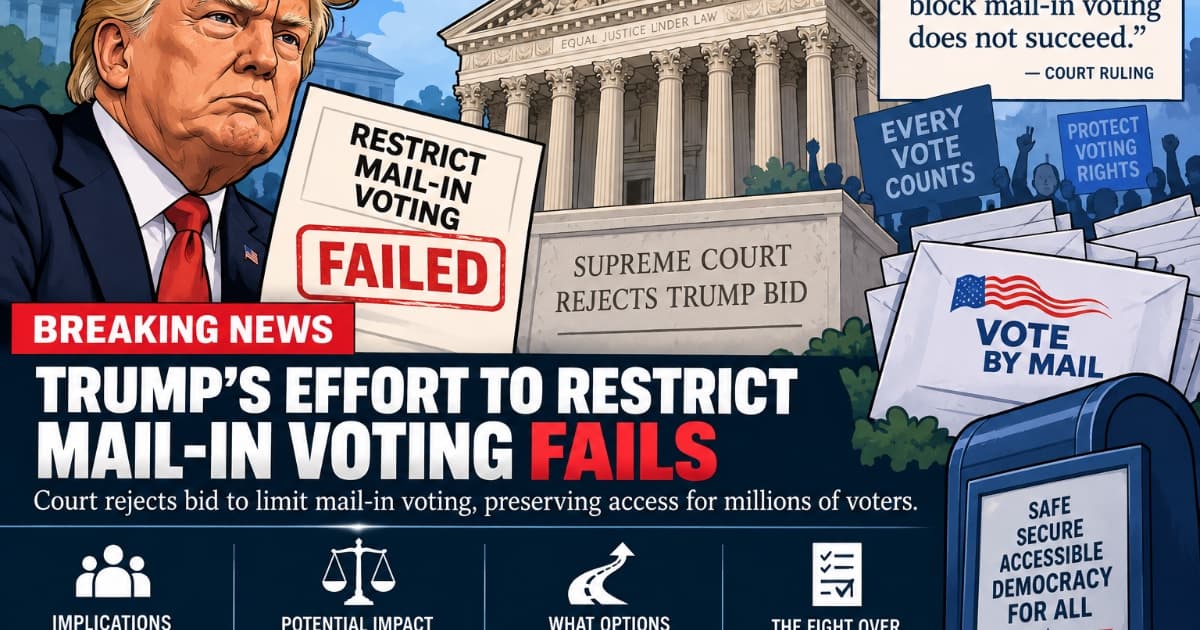
Breaking News
Trump's Mail-in Ballot Challenge Fails: What Comes Next
By The Daily Ledger1 min read11 views
A bid by Donald Trump to restrict mail-in voting has met legal defeat, raising questions about future voting access and election litigation strategy.
A legal challenge targeting mail-in voting has been unsuccessful, dealing a setback to efforts to restrict or curtail the practice ahead of upcoming elections.
The bid represented part of a broader push to tighten rules around ballot access, an effort that has faced repeated obstacles in courts across the country. Legal experts have consistently cited constitutional protections for voting rights and established state election procedures as barriers to such restrictions.
Judges reviewing the challenge found insufficient grounds to alter existing voting methods or impose new limitations on mail-in participation. The decision reinforces a pattern in recent election litigation in which courts have resisted attempts to narrow ballot access after examining the evidence and applicable law.
Voting rights advocates have framed the outcome as a validation of mail-in voting's legitimacy and security. Supporters of the practice have long argued that it expands participation, particularly for voters with mobility challenges, work conflicts, or military service abroad.
The unsuccessful challenge may signal limits to future litigation strategies in this area. Legal analysts suggest that parties seeking to reshape voting procedures face a high bar when challenging practices already embedded in state law and repeatedly upheld by courts.
Election administrators and state officials continue to manage mail-in operations under existing frameworks. The decision does not alter current voting procedures or voter eligibility rules.
This outcome adds to a growing body of precedent suggesting courts view established voting methods as legally sound. As election seasons approach, the ruling may influence how legal challenges to voting access are framed and pursued.
The broader debate over ballot security and accessibility remains active in legislative chambers and among election officials, even as courts have consistently declined to restrict mail-in voting on constitutional or evidentiary grounds.


Comments (0)
No comments yet. Be the first to share your thoughts.
Leave a comment
Comments are reviewed before they appear.