 Breaking News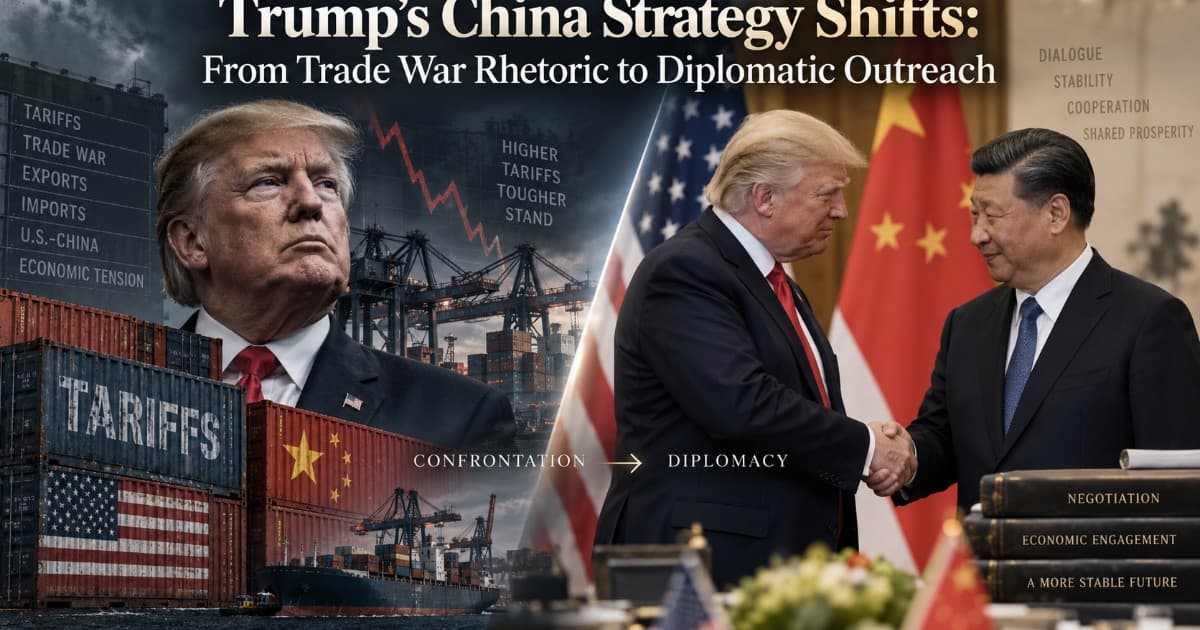
Breaking News
Trump's China Strategy Shifts: From Trade War Rhetoric to Diplomatic Outreach
By The Daily Ledger2 min read1 views
Trump's approach to China has undergone a notable reversal, moving away from his earlier criticism toward a strategy emphasizing diplomatic engagement with…
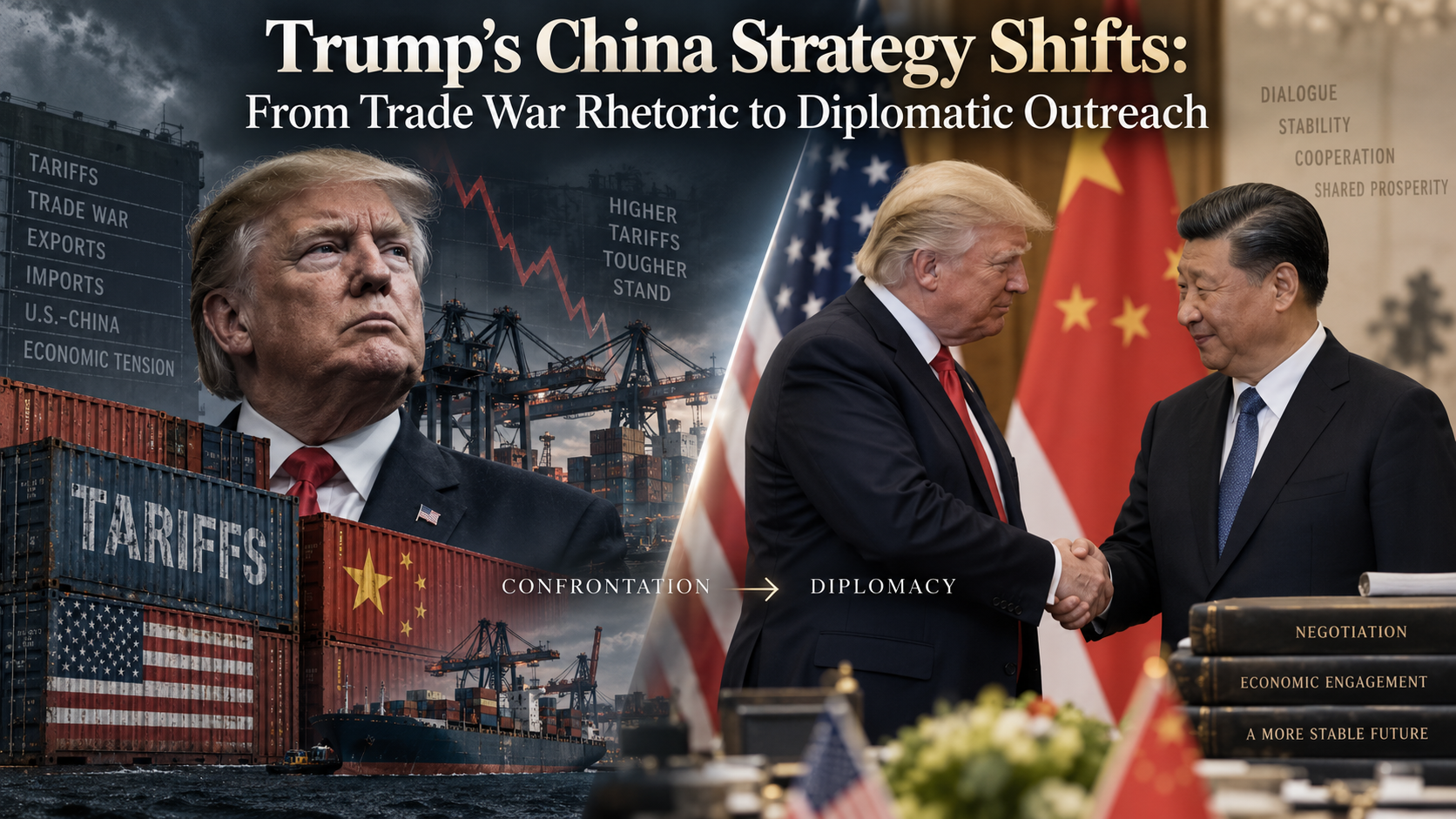
Donald Trump's public stance toward China has undergone a notable transformation from his earlier years in office, when his administration pursued one of the most confrontational approaches to Beijing in decades.
During his first term as president, Trump championed aggressive trade policies against China, implementing tariffs on hundreds of billions of dollars in Chinese goods and frequently criticizing what he characterized as unfair trade practices and intellectual property theft. His rhetoric was consistently sharp, and the trade tensions escalated into what became known as the trade war, affecting markets and supply chains globally.
In contrast, more recent positioning has reflected a softer tone toward Chinese leadership. Rather than emphasizing conflict, Trump's current approach appears focused on engagement and dialogue, with language suggesting a desire for improved relations. This shift has been evident in both his public statements and apparent willingness to meet with Chinese officials at various levels.
The reasons behind this strategic recalibration remain multifaceted. Economic considerations may play a role, as trade relationships remain consequential for American business interests and financial markets. Political calculations could also factor into the approach, particularly regarding how different constituencies respond to China-related messaging. Additionally, the broader geopolitical landscape has evolved since his earlier tenure, potentially prompting a reassessment of priorities and tactics.
The change in approach raises questions about consistency and clarity in long-term policy direction. Observers are watching to see whether this represents a fundamental shift in philosophy or a tactical adjustment designed to achieve specific near-term objectives. The implications extend beyond bilateral relations, affecting dynamics with allied nations and America's broader strategic positioning in the Asia-Pacific region.
As these dynamics continue to unfold, the practical effects on trade policy, investment flows, and diplomatic coordination remain subjects of significant interest to business leaders, policymakers, and international observers.
Comments (0)
No comments yet. Be the first to share your thoughts.
Leave a comment
Comments are reviewed before they appear.