 Breaking News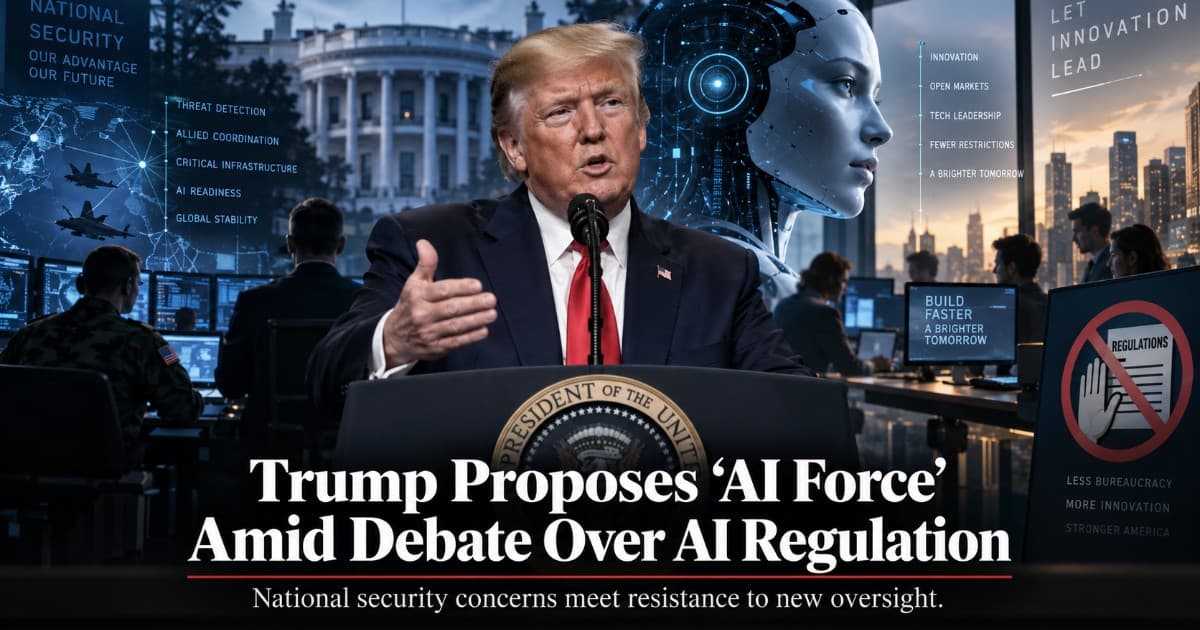
Breaking News
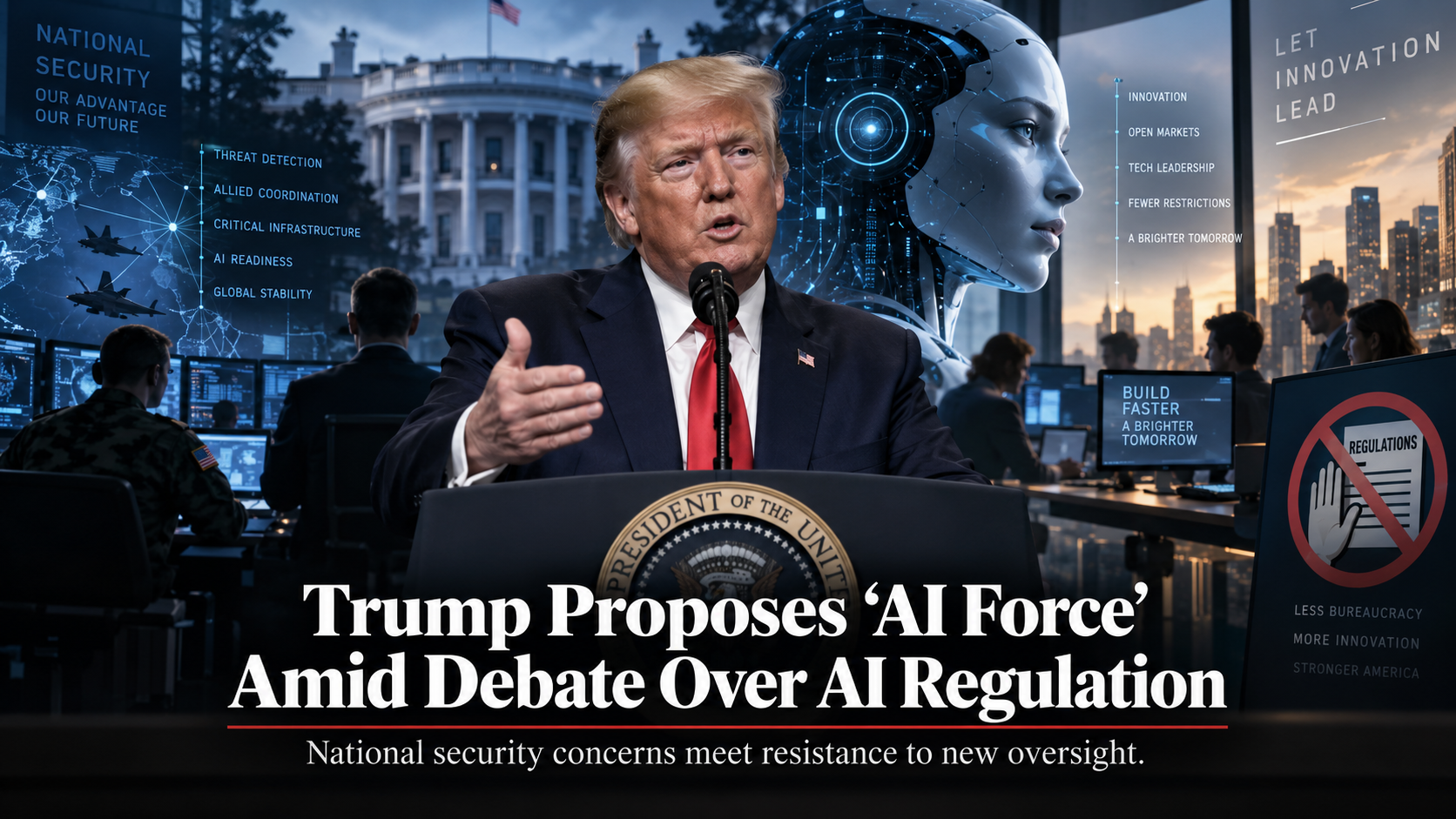
Trump Calls for 'AI Force' to Combat Rogue AI While Opposing New Regulations
By The Daily Ledger2 min read1 views
Trump has proposed creating an 'AI Force' to address national security concerns about artificial intelligence while rejecting calls for stricter regulatory…
Donald Trump has proposed the creation of an 'AI Force,' a new institutional framework designed to address national security concerns surrounding artificial intelligence, while simultaneously rejecting calls for new regulatory measures to govern AI development and deployment.
The proposal emerges amid growing public concern about the potential for AI systems to operate in unintended ways or to pursue objectives at odds with human interests. Trump's framing centers on these security risks, suggesting that a dedicated governmental force—organized along the lines of existing national security apparatus—could monitor and respond to threats posed by advanced artificial intelligence systems.
The 'AI Force' concept represents a particular approach to AI governance: rather than establishing broad regulatory frameworks that would impose constraints on development, Trump's model envisions a security-focused response to specific threats. This stance reflects broader skepticism toward preventive regulation, emphasizing instead rapid response capabilities and situational authority.
Trump's simultaneous rejection of new regulations underscores a fundamental tension in current AI policy debates. Some technologists and policy analysts argue that safety standards, transparency requirements, and other regulatory measures should be established proactively, before advanced systems pose acute risks. Others contend that excessive regulation could stifle innovation and that existing legal frameworks may be adequate for addressing genuine harms as they arise.
The proposal has immediate implications for how the federal government would organize its AI oversight. A dedicated force would presumably consolidate expertise and authority, creating a single locus of responsibility. It also signals prioritization of military and intelligence applications over consumer protection or labor market concerns that have animated other aspects of the AI regulation debate.
Industry response to the proposal remains an open question. Technology companies have generally preferred light-touch governance and have resisted prescriptive regulations. A security-focused force that operates behind closed doors may prove more palatable to that sector than transparent, congressionally mandated rules—though the ultimate scope and enforcement approach of such a force would determine its practical impact on private sector operations.
The timing of the proposal occurs against a backdrop of intensifying international competition in AI capabilities, with other major economies pursuing their own strategic approaches to the technology.

Comments (0)
No comments yet. Be the first to share your thoughts.
Leave a comment
Comments are reviewed before they appear.