 Breaking News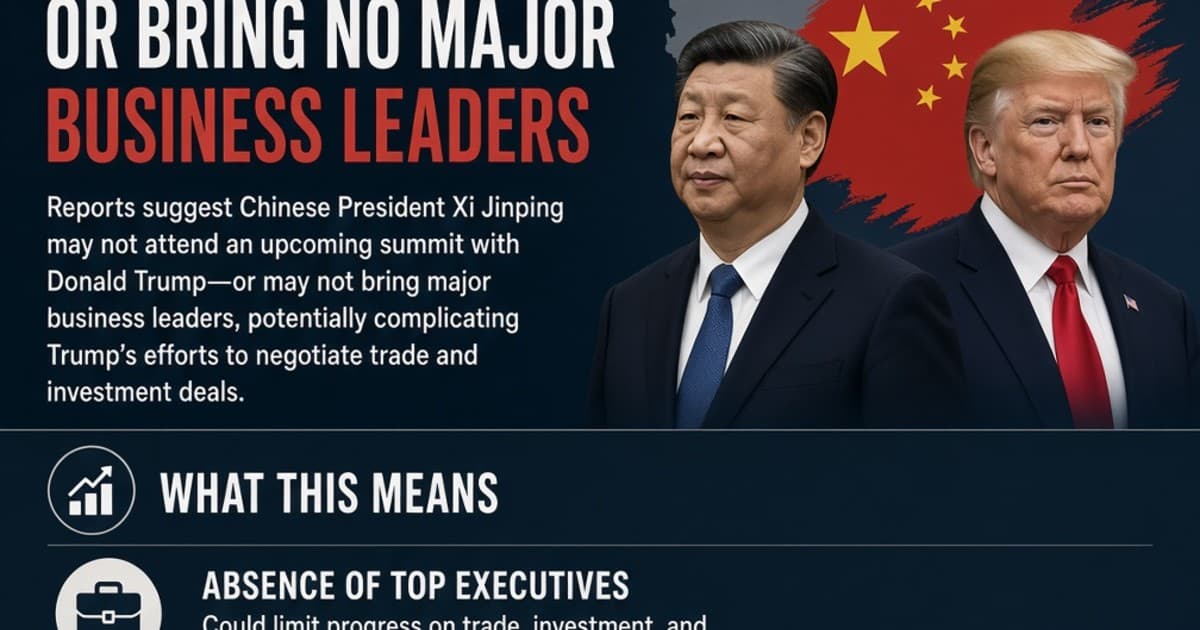
Breaking News
China's Xi Unlikely to Bring Corporate Leaders to Trump Summit
By The Daily Ledger2 min read2 views
Xi Jinping is unlikely to bring major business leaders to a summit with Donald Trump, potentially hampering efforts to negotiate new trade and investment…
As Donald Trump seeks to negotiate new trade and economic arrangements with China, a significant challenge is emerging: Chinese President Xi Jinping may not include prominent business leaders in any planned summit, according to recent reporting.
The potential absence of CEOs and corporate executives from China's delegation could substantially limit the scope and effectiveness of Trump's deal-making agenda. In past negotiations between major trading powers, the presence of leading business figures has typically signaled serious intent to reach concrete agreements and has provided both sides with direct insight into corporate needs and constraints.
Trump has long emphasized business-to-business connections and private sector input as critical to achieving favorable trade outcomes. The inclusion of major CEOs in previous high-level diplomatic meetings has allowed for discussion of specific commercial opportunities, investment flows, and sector-by-sector negotiations that might otherwise remain at the government level.
China's apparent reluctance to assemble a comparable corporate delegation suggests several possible dynamics. The move could indicate strategic caution ahead of negotiations, a desire to maintain distance from specific economic commitments, or a testing of Trump's position before committing senior business leaders to talks. It may also reflect Beijing's preference for government-to-government negotiation rather than direct corporate engagement.
The broader context of US-China relations remains tense, with longstanding disputes over tariffs, intellectual property protections, and technology restrictions. Any summit between Trump and Xi would occur against this backdrop of competing interests and mutual suspicion, making the composition of each delegation particularly significant.
For the American business community, the structure of such negotiations carries real implications. Companies with major operations or supply chains in China have sought stability in the bilateral relationship and clarity on future trade terms. Limited corporate representation from the Chinese side could reduce opportunities for direct dialogue on industry-specific concerns.
How both countries approach the summit—and who they choose to send—will likely offer early signals about the realistic scope for reaching new agreements. Without active participation from major Chinese businesses, any deals reached may face questions about implementation and private sector buy-in.
Comments (0)
No comments yet. Be the first to share your thoughts.
Leave a comment
Comments are reviewed before they appear.