 Breaking News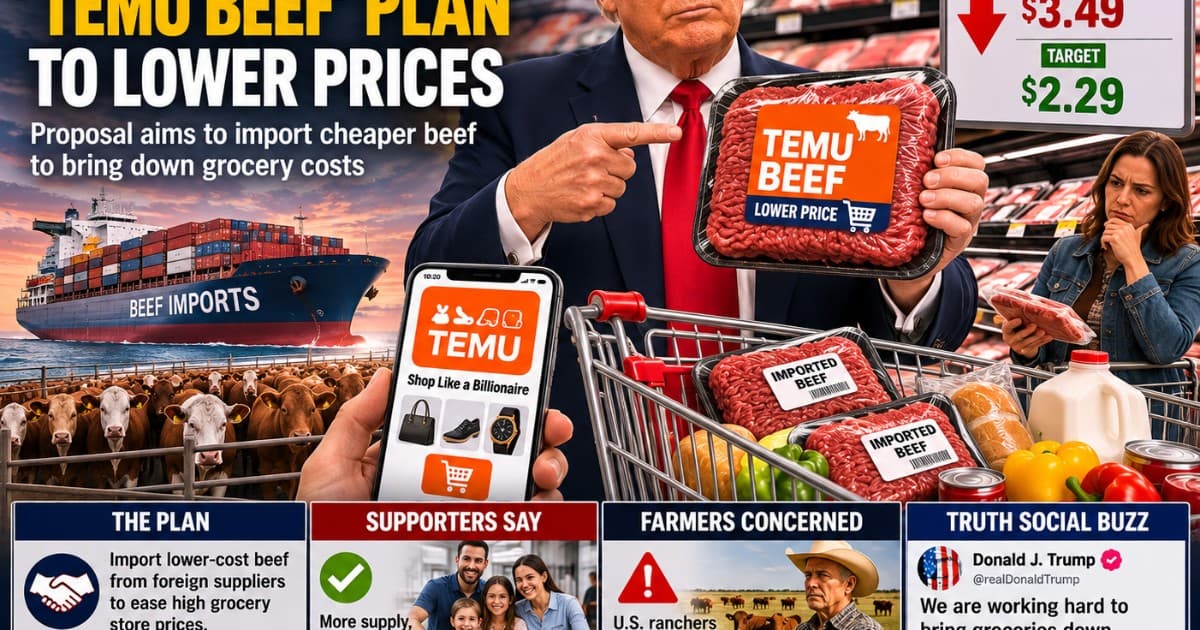
Breaking News
What Is 'Temu Beef'? Inside the Push to Import Cheaper Ground Beef and What It Could Mean for Your Grocery Bill
By The Daily Ledger2 min read111 views
The Trump administration is exploring beef imports to lower grocery prices, but the plan has drawn scrutiny over food safety, labeling rules, and impact on U.S.
Trump Administration's Push for Imported Beef Sparks 'Temu Beef' Debate
A push by the Trump administration to lower grocery costs by importing more beef has ignited a heated conversation among consumers, ranchers, and food safety advocates — and spawned an unlikely viral nickname in the process.
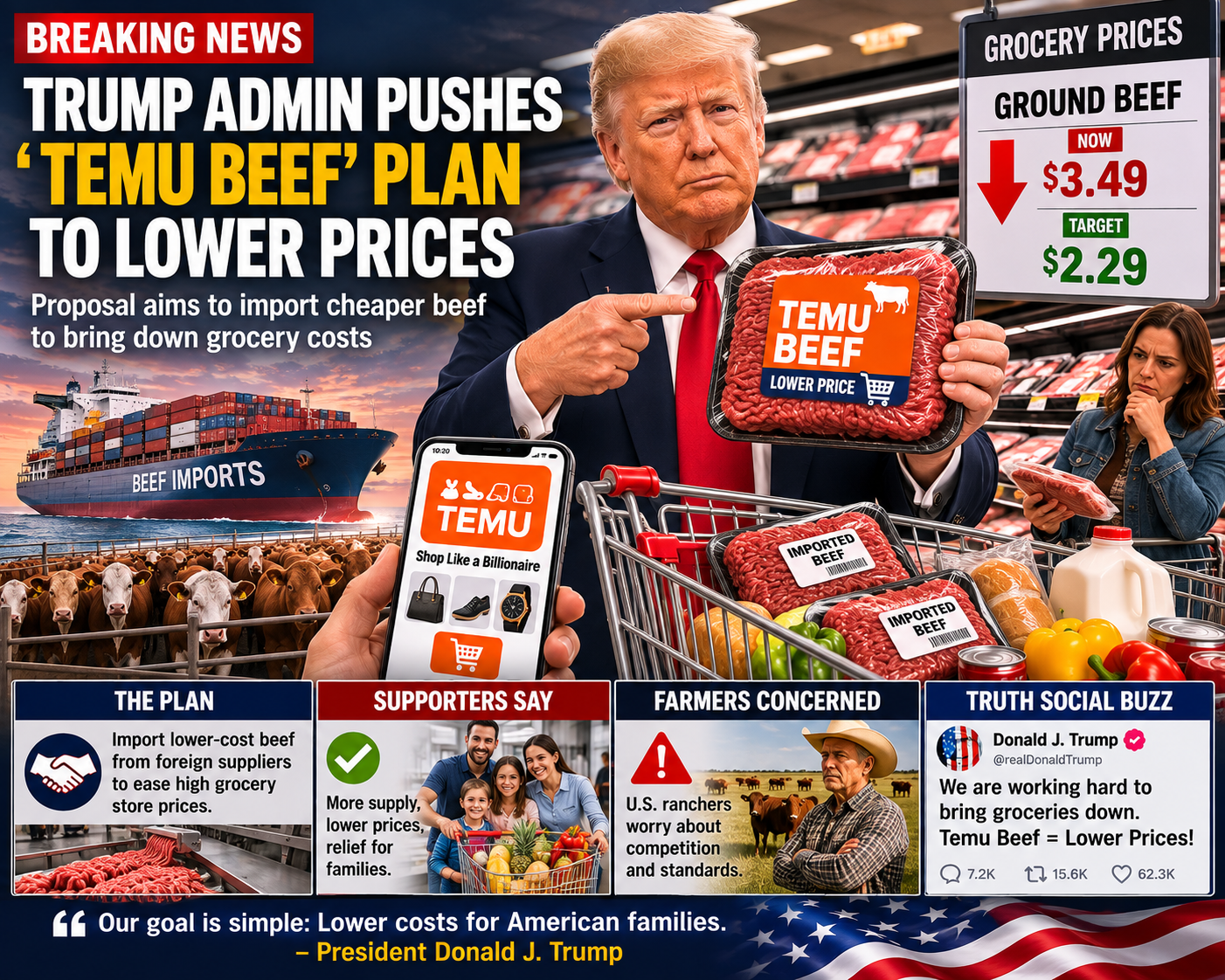
Critics and skeptics on social media, including on Trump's own Truth Social platform, have taken to calling the proposed imported beef "Temu beef," a pointed reference to the Chinese-owned discount e-commerce site known for bargain-priced goods of variable quality. The comparison is rhetorical rather than literal — the beef in question would not come from China — but the nickname has stuck as shorthand for concerns about cheap, foreign-sourced meat entering the American food supply.
The administration has framed the effort as a practical step toward fulfilling promises to bring down food prices, which remain a top concern for American households following years of elevated inflation. Ground beef in particular has become a symbol of grocery sticker shock, with prices climbing sharply over recent years due to a combination of supply chain pressures, drought conditions affecting cattle herds, and consolidation among major meatpacking companies.
The United States already imports beef from a range of countries, including Australia, New Zealand, Canada, and Brazil. All imported beef is subject to USDA inspection and must meet baseline safety standards before entering the domestic market. Proponents of expanding imports argue that increased supply from lower-cost producers abroad could exert meaningful downward pressure on retail prices.
But domestic cattle ranchers and their advocates are pushing back. American beef producers, many of them small family operations, argue that cheaper imports undermine their livelihoods without addressing the structural factors — including meatpacker consolidation — that critics say most directly drive consumer prices. Industry groups have long warned that opening the market further to foreign beef could accelerate the decline of independent ranching in the United States.
Food safety advocates have raised a separate set of questions, centered on whether American regulatory infrastructure is equipped to handle a meaningful increase in imported beef volume and whether existing inspection equivalency agreements with foreign governments are sufficiently rigorous.
Adding to the consumer confusion is the issue of labeling. The country-of-origin labeling system for beef has been weakened over the years following international trade disputes, meaning that ground beef sold in American supermarkets may contain meat from multiple countries without clear disclosure on the package. Consumer advocates argue that any expansion of imports should be accompanied by stronger, clearer labeling requirements so shoppers can make informed choices.
For now, the debate over what critics are calling Temu beef reflects a broader tension in the administration's economic agenda: the desire to deliver lower prices to consumers quickly, set against the concerns of domestic industries and the regulatory complexities of international food trade. Whether expanded beef imports would translate into meaningful savings at the checkout counter — and how quickly — remains an open question.
#Climate
Related Stories
Breaking News

Comments (0)
No comments yet. Be the first to share your thoughts.
Leave a comment
Comments are reviewed before they appear.