 Breaking News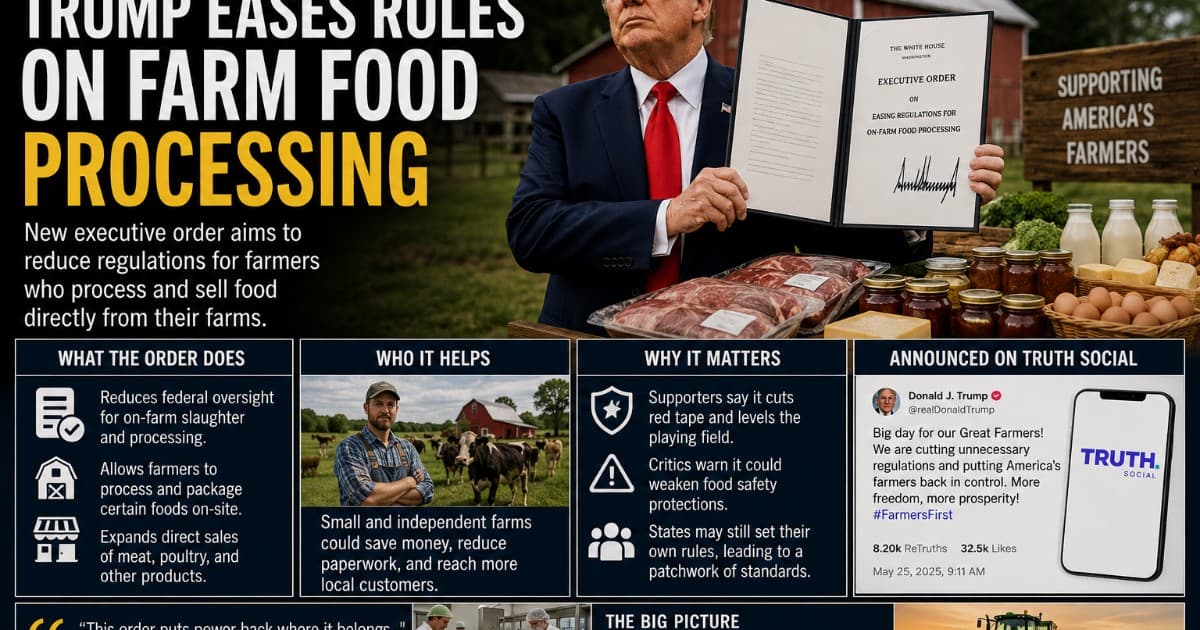
Breaking News
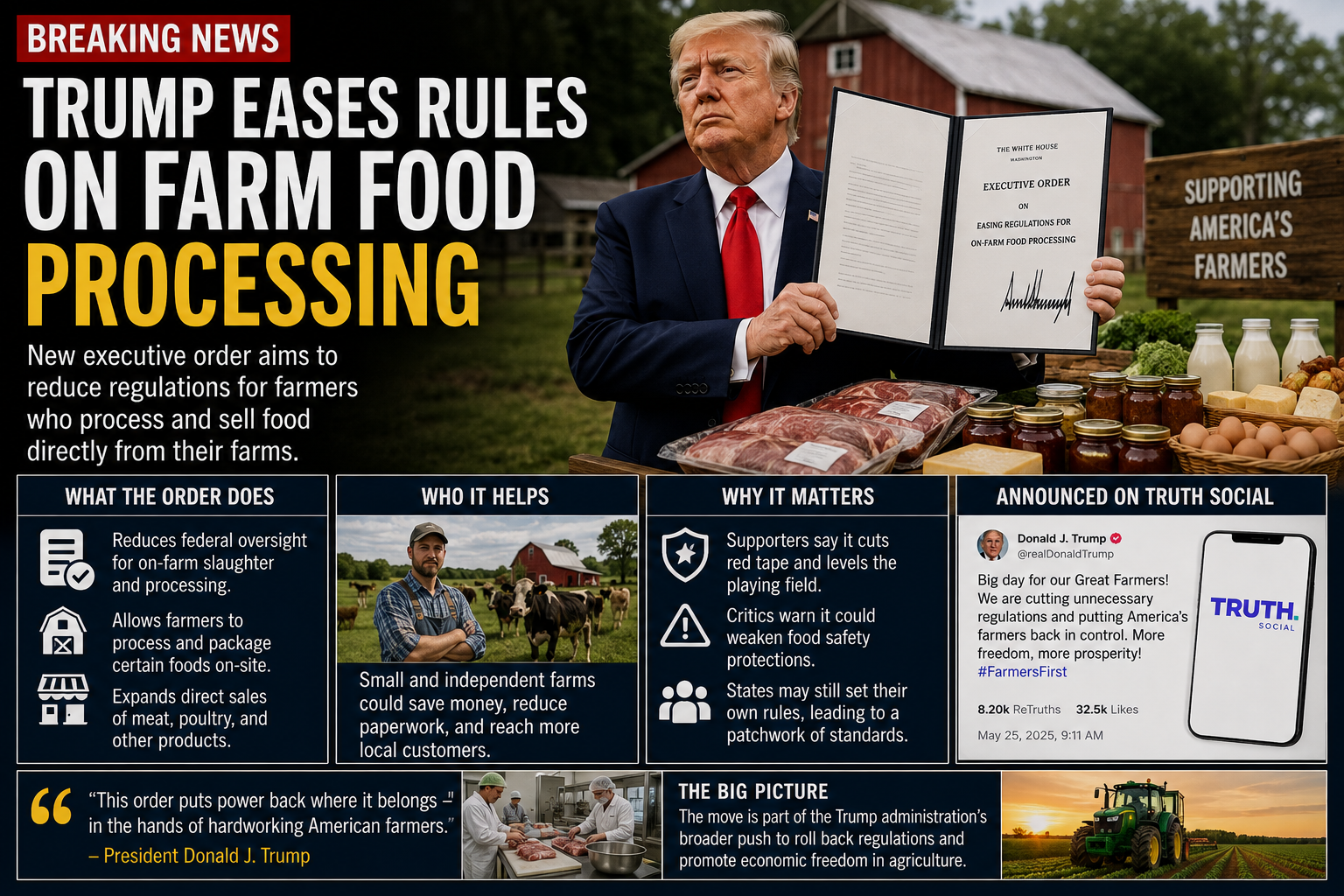
Trump Signs Order Loosening Rules on On-Farm Food Processing
By The Daily Ledger2 min read54 views
President Trump has signed an executive order aimed at relaxing federal regulations on food processing at the farm level, a move supporters say will help small…
Trump Order to Allow Farms to Process Food
President Donald Trump has signed an executive order intended to relax federal regulations governing food processing on farm properties, a move the White House says will expand economic opportunities for small agricultural producers across the country.
The order, which Trump promoted through his Truth Social platform, is aimed at reducing the regulatory burden on farmers who want to process and sell food products directly to consumers without routing their goods through large, federally inspected facilities. For many small and mid-size farm operators, the cost and logistics of accessing those facilities have long represented a significant barrier to direct-to-consumer sales.
Under the existing federal framework, meat and poultry processing in particular is subject to mandatory inspection by the U.S. Department of Agriculture. Farms seeking to sell processed products commercially are generally required to use USDA-inspected facilities, a requirement that critics in the agricultural community say disproportionately disadvantages smaller operations that cannot afford their own compliant infrastructure or do not have easy access to shared facilities.
Supporters of the order, including many in the small-farm and local-food movements, argue that easing these requirements would allow farmers to sell products such as pasture-raised meats, poultry, and other goods directly at farm stands, farmers markets, and through community-supported agriculture programs. They contend that direct relationships between producers and consumers offer a natural layer of accountability that can supplement formal regulatory oversight.
The announcement fits within a broader deregulatory agenda that the Trump administration has pursued across multiple sectors since returning to office. The use of Truth Social to amplify the order underscores how the platform has become an increasingly prominent channel for rolling out policy initiatives, sometimes in advance of formal government communications.
Not everyone has welcomed the move. Food safety advocates have raised concerns that reducing inspection requirements on farm-level processing could increase the risk of foodborne illness, particularly for vulnerable consumers. They note that federal inspection systems exist in part to provide a standardized, traceable chain of oversight that makes it easier to identify and contain outbreaks when they occur.
The precise scope of the order — including which food categories it covers, how it interacts with state-level food safety laws, and the timeline for federal agencies to put new rules into effect — will be closely watched by agricultural groups, public health organizations, and state regulators in the coming weeks.
Related Stories
Breaking News
Comments (0)
No comments yet. Be the first to share your thoughts.
Leave a comment
Comments are reviewed before they appear.