 Breaking News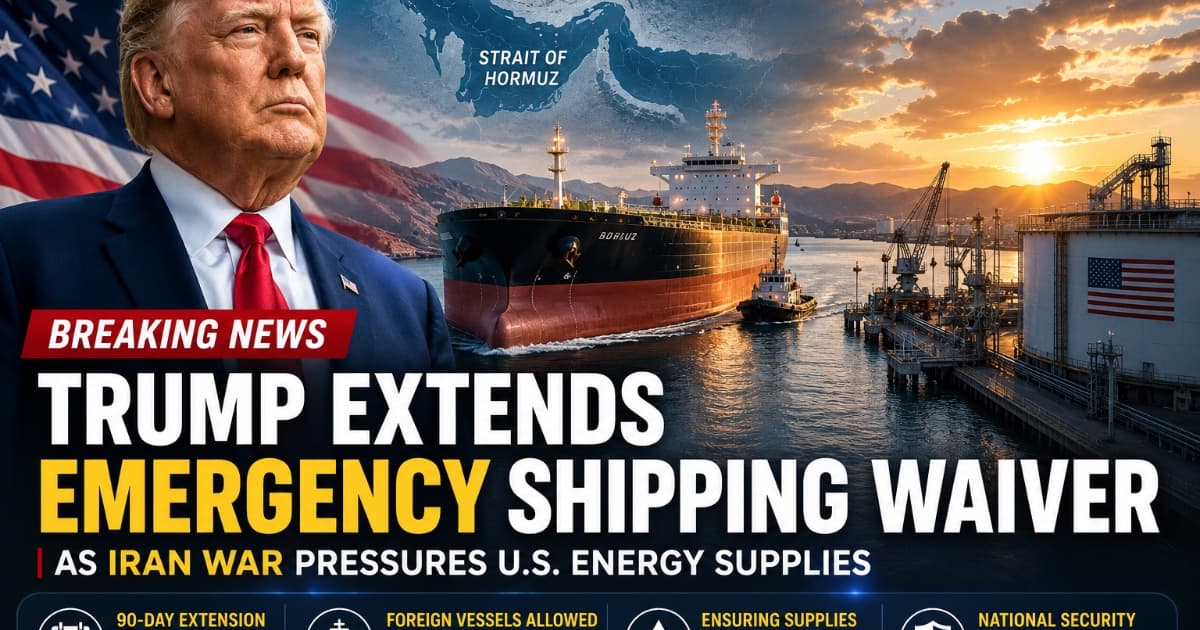
Trump Extends Emergency Shipping Waiver as Iran War Pressures U.S. Energy Supplies
By The Daily Ledger6 min read22 views
Trump Extends Emergency Shipping Waiver as Iran War Pressures U.S. Energy Supplies
Trump Extends Emergency Shipping Waiver as Iran War Pressures U.S. Energy Supplies
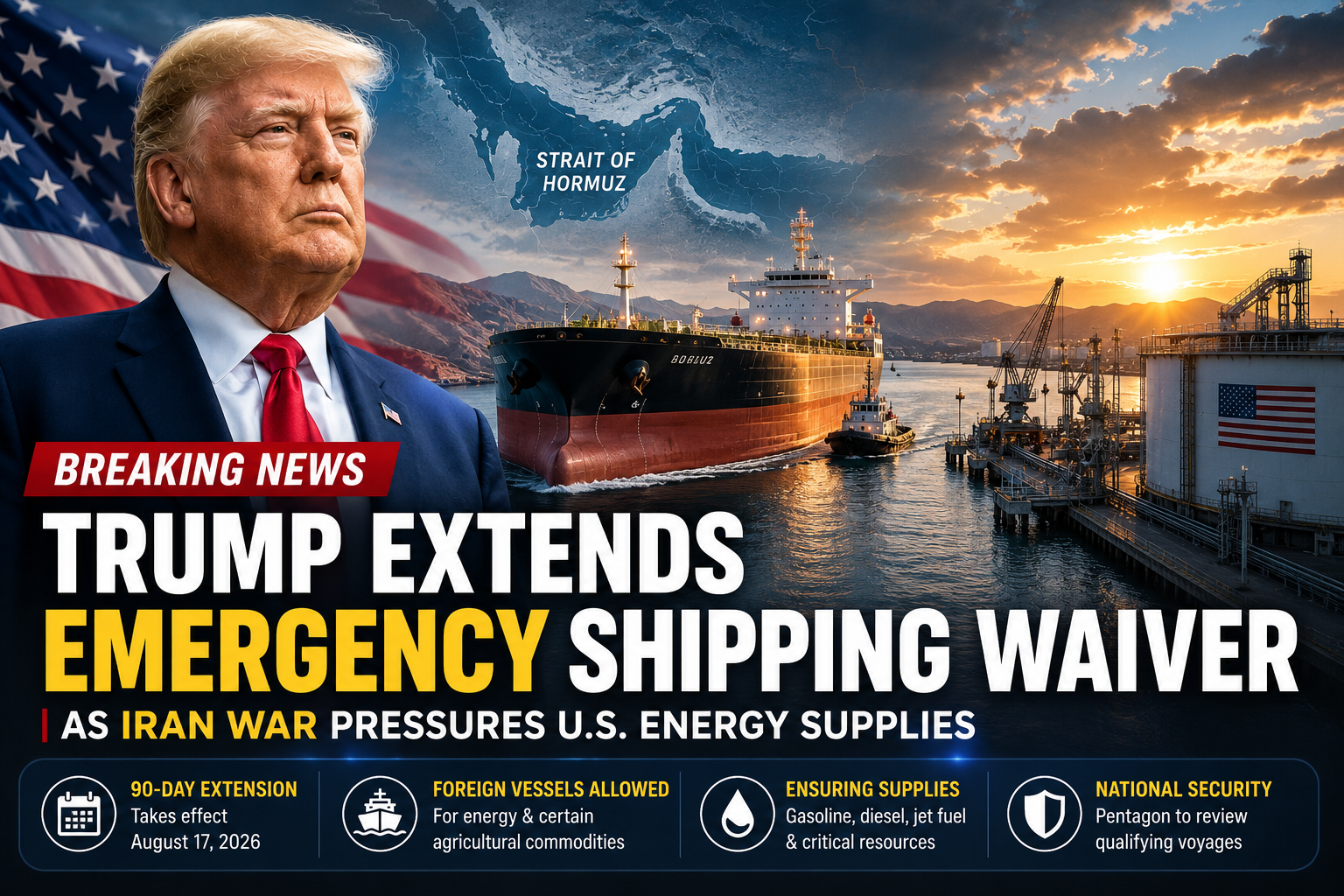
President Donald Trump has extended an emergency waiver allowing foreign vessels to transport key energy and agricultural products between U.S. ports for another 90 days, as the war with Iran continues to put pressure on global energy supplies and shipping routes.
The latest extension takes effect August 17, 2026, and represents another effort by the Trump administration to protect domestic access to fuel and other critical commodities during continuing disruption surrounding the Strait of Hormuz.
The measure temporarily relaxes requirements under the Jones Act, a century-old U.S. maritime law that generally requires goods transported between American ports to travel aboard vessels that are U.S.-built, U.S.-owned and U.S.-crewed.
Trump first waived those requirements on March 17 following the outbreak of war with Iran.
The administration said the move was intended to make it easier to move oil and refined fuels around the United States while reducing pressure on fuel prices.
Now, with uncertainty surrounding the Strait of Hormuz continuing, the administration has decided to keep the emergency measure in place.
What Trump’s 90-Day Extension Does
The latest waiver allows qualifying foreign vessels to transport certain commodities between U.S. ports despite the normal restrictions imposed by the Jones Act.
Unlike some previous extensions, however, the new waiver is more targeted.
It applies primarily to cargo considered important for energy supplies and agriculture.
That includes products such as:
- Oil and other energy commodities
- Gasoline and refined fuels
- Fertilizer
- Soybean oil
- Other qualifying agricultural commodities
The Pentagon will also consult with the U.S. Maritime Administration to determine which individual voyages qualify for exemptions.
That gives the administration greater control over how the emergency waiver is used.
Why Trump Extended the Waiver
The central concern is maintaining reliable access to critical supplies.
The war with Iran has disrupted normal energy transportation patterns and increased uncertainty surrounding the Strait of Hormuz.
The narrow waterway is one of the world’s most important routes for oil and natural-gas shipments.
When traffic through Hormuz is disrupted, governments and energy companies have to find alternative ways to move supplies.
Those alternatives can be more expensive and less efficient.
Allowing foreign vessels to transport qualifying goods between American ports gives the United States additional shipping capacity during the disruption.
White House Says Waiver Is Protecting Critical Supplies
The Trump administration says the measure is already helping increase domestic fuel deliveries.
White House spokeswoman Taylor Rogers said the waiver was extended to help ensure that the U.S. military and important American industries continue receiving critical resources.
According to the White House, the waiver has contributed to increased domestic deliveries of gasoline, diesel and jet fuel.
That is particularly important during a period when disruptions to international energy transportation can quickly affect domestic supplies.
Strait of Hormuz Remains at Center of Energy Crisis
The Strait of Hormuz remains one of the most important elements of the Iran conflict.
The waterway connects the Persian Gulf with international shipping routes and is essential for major energy-producing countries in the region.
Oil and liquefied natural gas from Gulf producers normally travel through the strait before reaching customers around the world.
The Iran conflict has severely disrupted those normal shipping patterns.
That has forced governments to consider emergency measures designed to protect energy supplies and reduce the economic consequences of the disruption.
Trump’s decision to extend the Jones Act waiver suggests the administration is preparing for the possibility that those pressures may continue.
Why the Jones Act Normally Restricts Foreign Ships
The Jones Act dates to 1920.
Among its major provisions, the law generally requires cargo transported between U.S. ports to use qualifying American vessels.
Supporters argue that the law protects American shipbuilding, maritime jobs and national-security capabilities.
Critics have long argued that the restrictions can make domestic shipping more expensive, particularly during emergencies when additional vessels are urgently needed.
Presidents can waive certain requirements when national-defense or emergency considerations justify doing so.
The Iran conflict has created precisely the type of extraordinary supply situation in which the administration believes additional shipping capacity is necessary.
Energy Prices Remain a Political Challenge
The waiver also highlights one of the most politically sensitive consequences of the Iran war: energy prices.
Higher global oil prices can eventually increase the price Americans pay for gasoline, diesel, aviation fuel and other products.
Those increases can spread throughout the economy.
Truck transportation becomes more expensive.
Airlines face higher fuel costs.
Farmers can pay more for fuel and fertilizer.
Manufacturers can face higher transportation and production expenses.
Ultimately, some of those costs can reach consumers through higher prices.
Keeping domestic fuel transportation moving efficiently is therefore important not only for national security but also for limiting additional economic pressure on American households.
Agricultural Supplies Are Also Included
The new waiver is not limited to fossil fuels.
Certain agricultural commodities, including fertilizers and soybean oil, can also qualify.
Fertilizer is particularly important because energy prices and global shipping disruptions can significantly affect agricultural production costs.
American farmers depend on reliable access to fertilizer and other inputs.
If those supplies become scarce or expensive, the consequences can eventually affect food production and consumer prices.
By including agricultural commodities, the administration is attempting to protect a broader section of the U.S. supply chain.
Pentagon Gets a Larger Role
Another important change is the Pentagon’s involvement.
Under the latest extension, the Defense Department will consult with the Maritime Administration when determining which voyages receive exemptions.
That reflects the national-security dimension of the policy.
Energy supplies are essential not only for civilian transportation and industry but also for military operations.
Ensuring adequate access to fuel during an international conflict is therefore a strategic concern for Washington.
What Happens Next?
The new waiver lasts for another 90 days.
During that period, the administration will be watching several major developments.
The most important will be the situation surrounding Iran and the Strait of Hormuz.
If normal shipping activity resumes and energy markets stabilize, the need for extraordinary domestic shipping measures could decline.
If the conflict continues or worsens, however, Washington could face additional decisions about maintaining energy supplies and controlling transportation costs.
The administration will also have to balance emergency flexibility against Trump’s broader push to rebuild American shipbuilding and maritime capacity.
That creates an unusual tension in U.S. policy.
Washington wants a stronger American maritime industry over the long term, but the immediate Iran-related emergency has created a need for additional foreign shipping capacity.
Bottom Line
President Trump has extended the emergency Jones Act waiver for another 90 days as the United States deals with energy and supply-chain pressures connected to the Iran war.
The extension takes effect August 17 and allows qualifying foreign vessels to transport energy products and certain agricultural commodities between U.S. ports.
The administration says the measure is helping increase deliveries of gasoline, diesel and jet fuel while ensuring critical resources remain available to the military and major industries.
The decision also underscores how deeply the Iran conflict and disruption around the Strait of Hormuz are affecting U.S. economic policy.
What began as a geopolitical confrontation is now influencing decisions involving American shipping, fuel supplies, agriculture and domestic prices.
With the Hormuz situation still unresolved, Trump’s 90-day extension indicates Washington is preparing for energy and transportation pressures to continue.
This article is based on information available as of August 17, 2026. The situation involving Iran and the Strait of Hormuz remains subject to rapid change.
Related Stories
Breaking News

Comments (0)
No comments yet. Be the first to share your thoughts.
Leave a comment
Comments are reviewed before they appear.