 Breaking News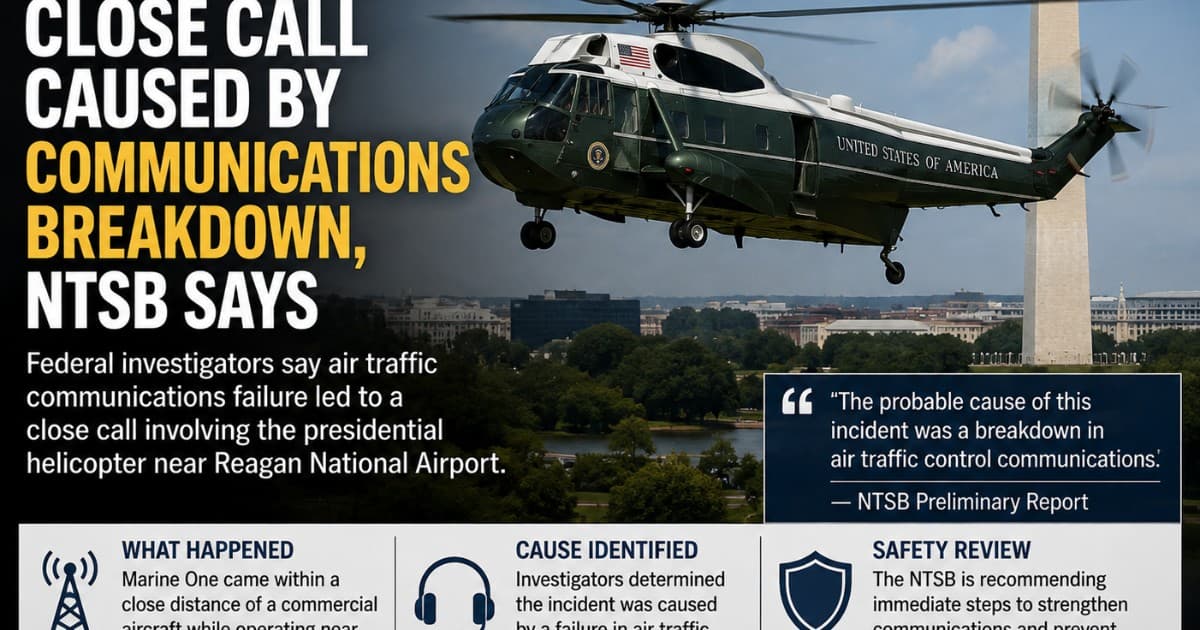
Breaking News
NTSB Blames Communication Breakdown for Marine One Near-Miss Incident
By The Daily Ledger2 min read43 views
Federal investigators have attributed a close call involving the presidential helicopter Marine One to a breakdown in air traffic communications, the NTSB…
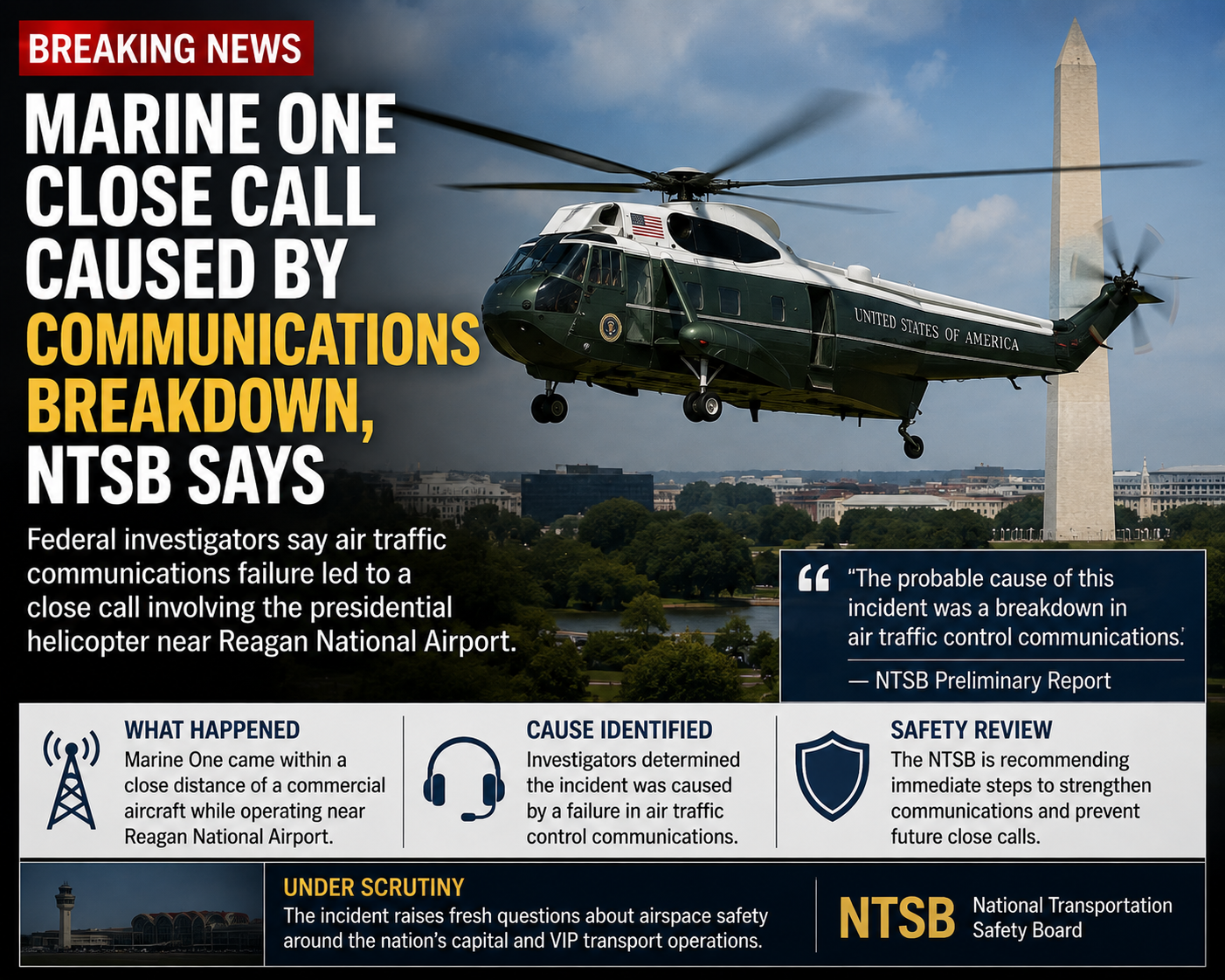
Marine One Close Call Linked to Communication Issues, NTSB Says
Federal investigators have determined that a close call involving Marine One, the presidential helicopter, stemmed from a breakdown in communications, the National Transportation Safety Board announced. The finding has renewed questions about the safety coordination surrounding one of the most closely managed flight operations in the United States.
The NTSB, which investigates aviation accidents and incidents but does not hold regulatory authority, concluded that a failure in communication — rather than mechanical malfunction or pilot error — was the primary contributing factor in the incident. The agency's findings point to gaps in how information was relayed between the parties responsible for managing the airspace around the presidential aircraft.
Marine One operations involve multiple layers of coordination, including the U.S. Marine Corps crew of HMX-1, the Secret Service, and federal aviation authorities. Flights typically occur within tightly controlled airspace, with strict protocols designed to prevent exactly the kind of close encounter that investigators described. When those protocols break down, even briefly, the consequences can be serious.
The incident drew heightened attention because of who travels aboard Marine One. The aircraft serves as the primary rotary-wing transport for the president, and any safety lapse connected to presidential travel carries immediate national security implications.
The NTSB's findings are likely to prompt calls for a review of communication procedures across the agencies involved. The board has the ability to issue formal safety recommendations, which are then directed to the relevant regulatory or operating bodies. Whether those recommendations lead to concrete procedural changes will be a matter for the FAA and the Department of Defense to determine.
The incident also arrives against a broader backdrop of scrutiny over air traffic control communication and staffing across the United States. Aviation safety advocates have pointed to systemic pressures within the air traffic management system as a contributing factor in a series of close calls at airports and in shared airspace nationwide.
Officials with the White House and the Marine Corps had not detailed specific corrective steps in response to the NTSB's conclusions. The investigation is expected to inform future safety protocols for presidential air transport operations.
#Climate
Related Stories
Breaking News

Comments (0)
No comments yet. Be the first to share your thoughts.
Leave a comment
Comments are reviewed before they appear.