 Breaking News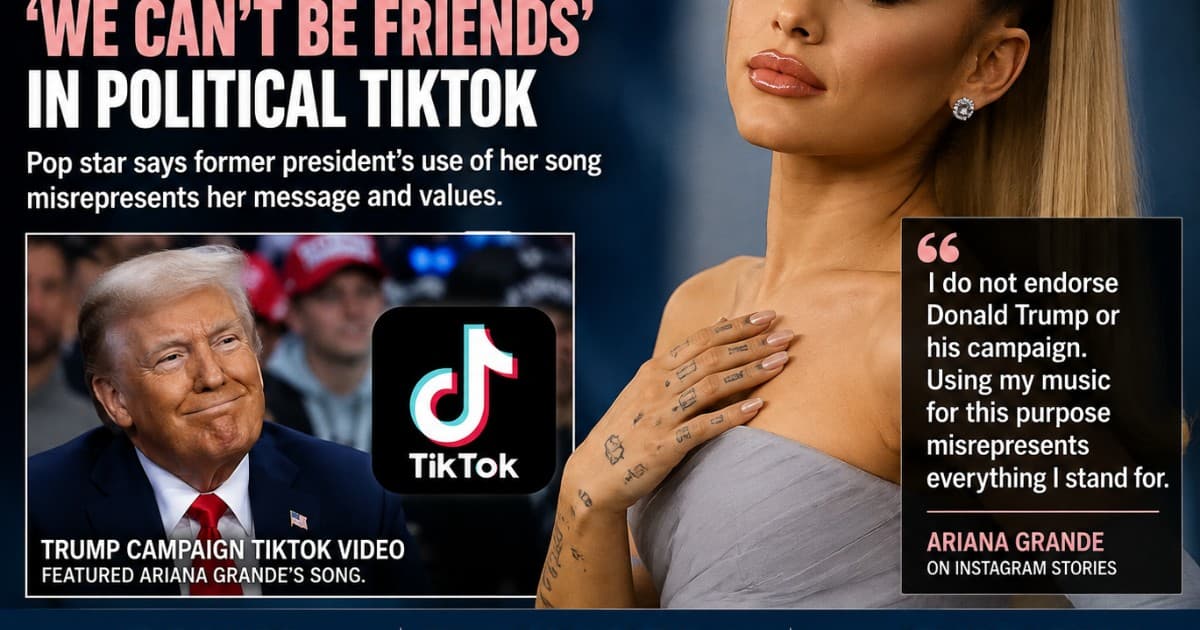
Breaking News
Ariana Grande Disputes Trump's Use of Her Song in Political TikTok Video
By The Daily Ledger1 min read43 views
Ariana Grande publicly objected to the use of her song in a political TikTok video, accusing the former president of misrepresenting her artistic message.
Pop star Ariana Grande has publicly objected to the use of her song "We Can't Be Friends" in a political video posted by former President Donald Trump, accusing him of misrepresenting the track's meaning and message.
Grande's criticism emerged after the video appeared on Trump's social media accounts, incorporating her music in a way the artist felt contradicted her own values and the song's intended message. In her response, Grande asserted that the former president's characterization of events or ideas did not align with her truth, rejecting the association between her work and the political framing.
The dispute raises ongoing questions about the relationship between music licensing and artist consent. While songs are often made available for licensing to be used in various contexts—including political advertisements and videos—the ability to license a track does not necessarily mean an artist endorses the message or agrees with how their work is being employed. Artists have increasingly pushed back against political figures using their music in ways that seem to imply support or alignment.
Grande's objection illustrates a broader tension in the digital age, where content can be created and shared rapidly across social platforms, sometimes outpacing an artist's ability to respond or seek legal remedy. The incident also highlights differences in how various platforms approach the moderation of copyrighted music in political content, and what mechanisms exist for creators to protect their work from unwanted association.
The exchange underscores a recurring dynamic where entertainment figures have sought to distance themselves from political uses of their art, asserting control over how their creative work represents them publicly and politically. Grande's public statement reaffirms her position on the disputed content and serves as a clear disavowal of any implied alignment with the message conveyed by the video in question.
Related Stories
Breaking News
Comments (0)
No comments yet. Be the first to share your thoughts.
Leave a comment
Comments are reviewed before they appear.