 Breaking News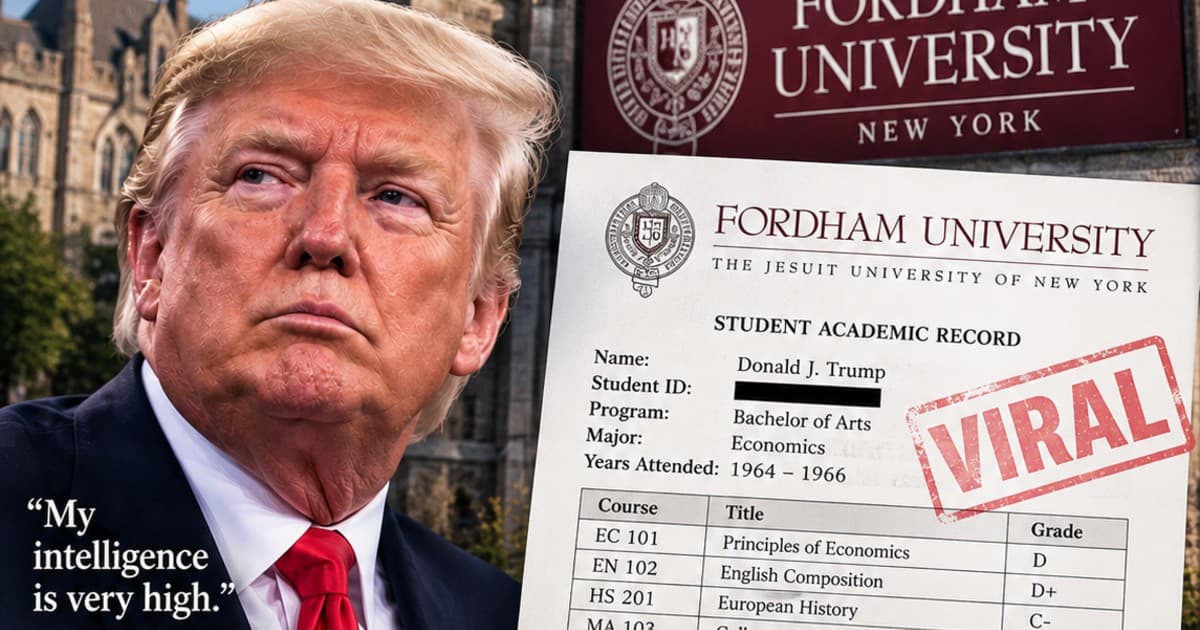
Breaking News
Viral Certificate Claiming to Show Trump's Fordham Grades Draws Scrutiny from Fact-Checkers
By The Daily Ledger2 min read13 views
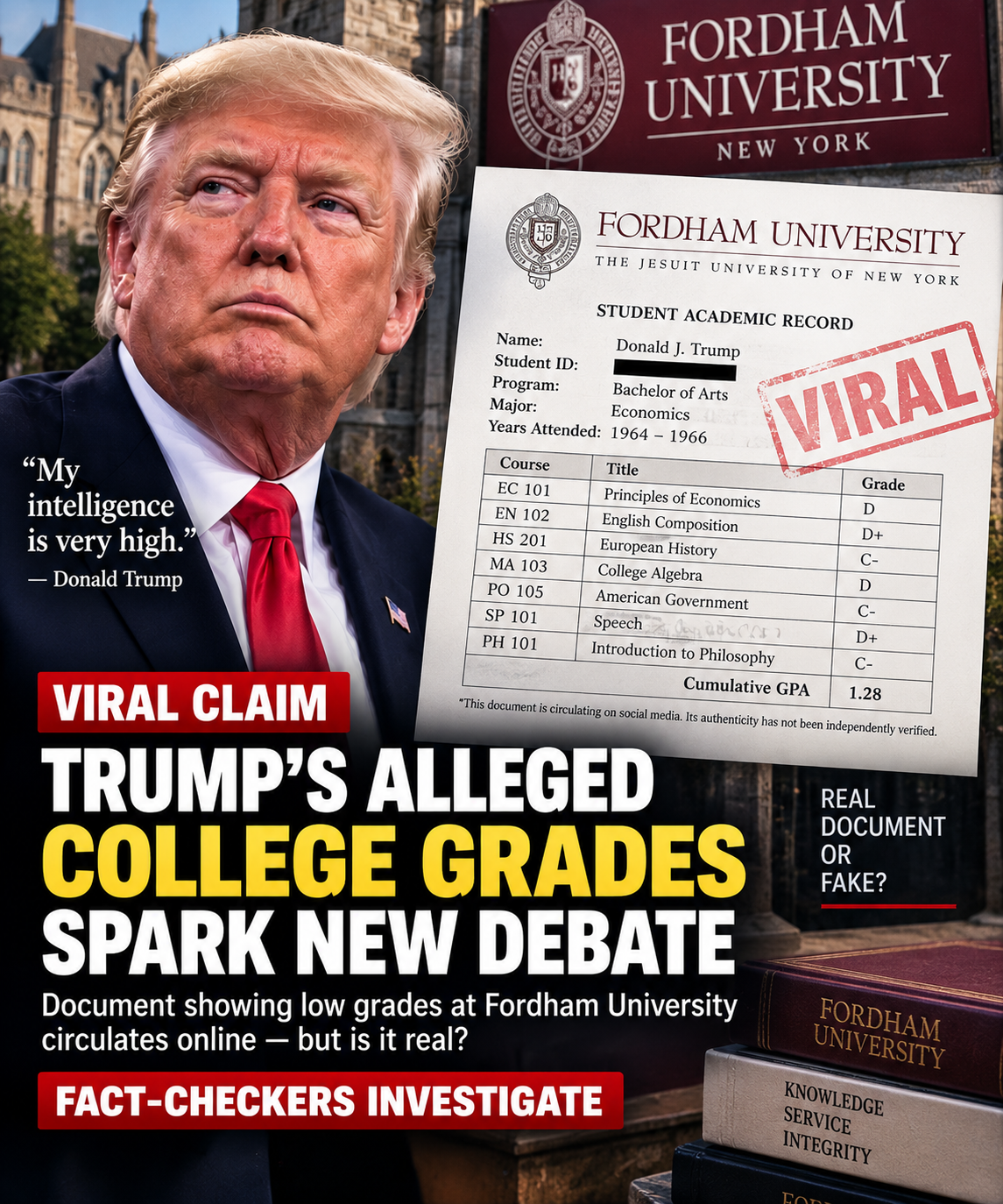
A document claiming to show Donald Trump's low grades from Fordham University is circulating online, prompting fact-checkers to examine whether it is genuine.
Fact Check: Does a Viral Certificate Show Trump's Low Grades at Fordham University?
A document claiming to show Donald Trump received poor grades during his time at Fordham University has spread widely across social media, reigniting a long-running public debate about the former president's academic record. Fact-checkers have been working to determine whether the certificate is authentic, altered, or fabricated entirely.
Trump attended Fordham University in New York City for roughly two years before transferring to the Wharton School of Finance at the University of Pennsylvania, from which he ultimately graduated. Over the course of his business career and his time in politics, Trump has frequently cited his Wharton education as a marker of his intelligence, at times describing himself as an exceptional student.
His actual academic records, however, have never been made public. The reluctance to release those records became a point of controversy when his former personal attorney, testifying before Congress, described being directed to contact academic institutions to discourage any disclosure of Trump's grades or standardized test scores. That testimony brought renewed attention to a question that had previously circulated mainly in political commentary.
The latest viral document appears to have emerged on social media platforms without a clear or verifiable origin. Experts who examine such materials typically look for signs of authenticity including formatting consistent with institutional documents from the relevant era, verifiable official seals, and a credible chain of custody explaining how a private academic record entered public circulation. So far, the provenance of this certificate remains unclear.
Fordham University, like all American universities, is bound by federal student privacy law, which prohibits institutions from disclosing academic records without the consent of the student. This legal framework makes official confirmation or denial from the university complicated, and it is the same reason Trump's records have never been formally released through institutional channels.
Fact-checkers note that fabricated or manipulated documents about political figures are a persistent feature of the social media landscape, particularly during periods of heightened political attention. A document's viral spread is not evidence of its authenticity — and in some cases, wide circulation is itself a warning sign that the material has not been independently verified.
At this stage, no major fact-checking organization has confirmed that the circulating certificate is a genuine academic record. Readers are encouraged to treat unverified documents shared on social media with caution, regardless of whether their contents align with existing beliefs about the subject.
Comments (0)
No comments yet. Be the first to share your thoughts.
Leave a comment
Comments are reviewed before they appear.