 Breaking News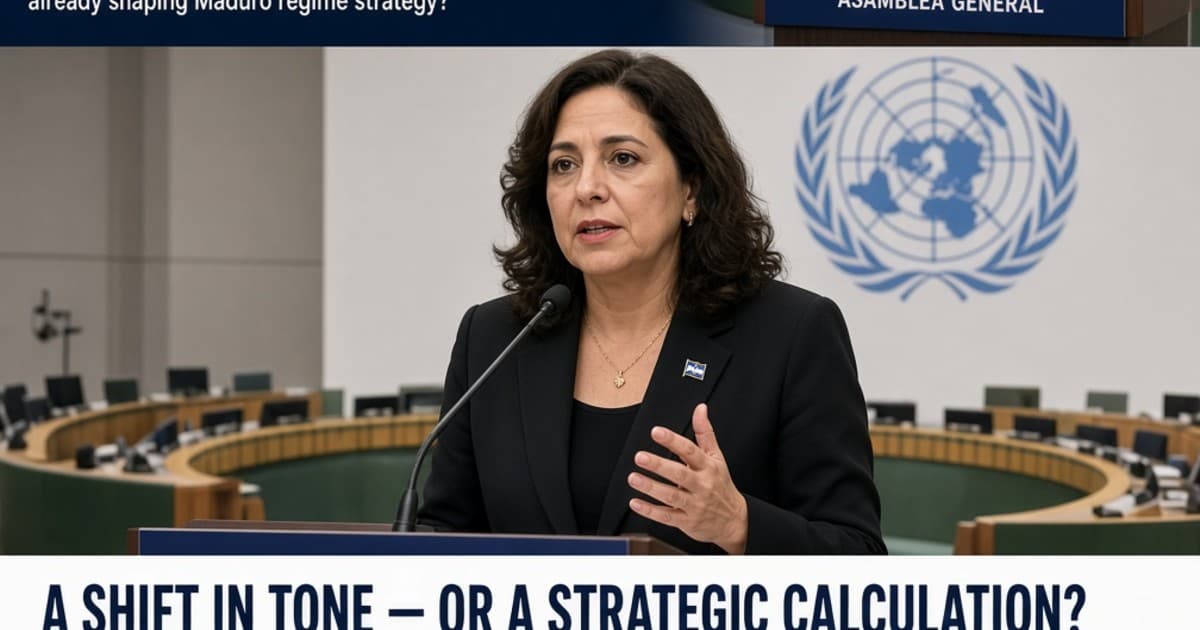
Breaking News
Venezuelan Official's UN Reversal Hints at Shifting Diplomatic Calculus
By The Daily Ledger2 min read2 views
A Venezuelan official's apparent change in rhetoric at the United Nations General Assembly suggests possible shifts in the country's diplomatic approach amid…
A Venezuelan government official's remarks at the United Nations General Assembly appear to mark a departure from the country's customary diplomatic posture, potentially signaling recalibrated political strategy amid a shifting regional landscape.
Delcy Rodríguez, a long-standing figure in Venezuela's government, delivered remarks that observers noted differed in tone and substance from positions traditionally held by Caracas. The apparent shift comes at a moment when Venezuela faces mounting international pressure and domestic political tensions.
The timing of the about-face coincides with the transition to a new US administration, which has indicated a fresh approach to Latin American policy. Venezuela has historically been a flashpoint in US–Latin American relations, with previous US governments pursuing different strategies of pressure, engagement, or containment. How the incoming administration plans to address Venezuela remains a subject of close attention among diplomats and analysts.
The reversal in UN rhetoric may reflect several possible calculations: recognition of Venezuela's constrained international position, internal regime assessments about the costs of rigid positioning, or preliminary soundings for future negotiations. Venezuelan officials have historically used international forums as venues to signal both defiance and, occasionally, openness to dialogue depending on circumstances.
For the Rodríguez government, a more flexible diplomatic posture could serve multiple purposes. It might ease some international isolation, create space for back-channel communications, or position Caracas advantageously ahead of potential negotiations with a new Washington administration. Conversely, observers of Venezuelan politics note that such shifts have sometimes reflected internal power calculations or changing assessments about what strategies serve the regime's interests.
The international community has watched Venezuelan politics closely in recent years. The country's position within the hemisphere, its oil reserves, and its strategic location make developments there consequential for regional stability and US foreign policy. Whether Rodríguez's UN positioning represents a genuine pivot or a tactical maneuver remains uncertain, but the shift signals that Venezuelan leadership continues to reassess its diplomatic and political options.
Comments (0)
No comments yet. Be the first to share your thoughts.
Leave a comment
Comments are reviewed before they appear.