 Breaking News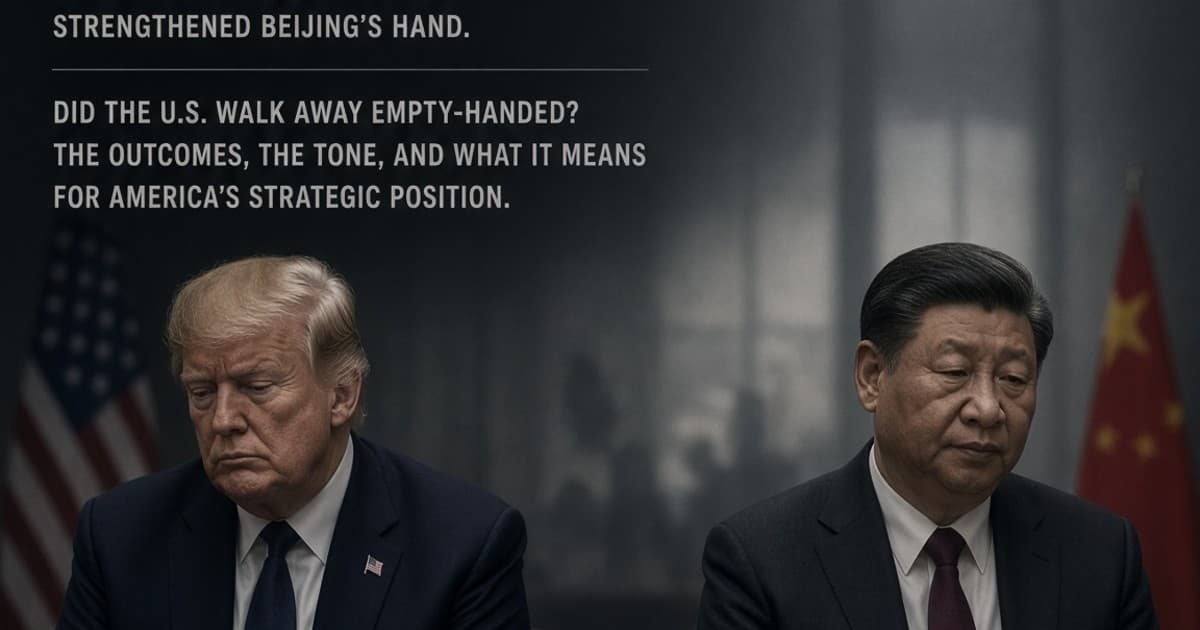
Breaking News
Trump-Xi Summit Yields Few Gains for U.S., Analysis Suggests
By The Daily Ledger2 min read3 views
A diplomatic meeting between Trump and Chinese leader Xi Jinping produced limited concrete results while strengthening China's international standing,…
A recent high-level summit between Donald Trump and Chinese President Xi Jinping has drawn scrutiny from analysts who question whether the carefully orchestrated meeting produced meaningful results or primarily served Beijing's diplomatic interests.
The gathering, marked by formal ceremonies and public statements of goodwill, resulted in limited concrete commitments on the issues that have defined U.S.-China tensions in recent years. Trade disputes, technology competition, and strategic rivalry in the Indo-Pacific region remained largely unresolved following the talks.
According to observers, the meeting's elaborate staging and diplomatic theater may have inadvertently benefited China by elevating its international standing and portraying bilateral relations as stable despite underlying disagreements. Beijing's framing of the summit emphasized dialogue and cooperation, messaging that resonates with countries seeking stability in the world's most consequential bilateral relationship.
For the Trump administration, the summit presented an opportunity to demonstrate direct engagement with a major global rival and explore potential areas of agreement. However, critics argue that high-profile meetings without substantive outcomes can create an appearance of progress while leaving core disputes unresolved.
The stalemate nature of the talks reflects the structural challenges facing U.S.-China relations. Both nations maintain fundamentally different strategic interests and have competing visions for regional influence and technological leadership. Bridging these gaps typically requires detailed negotiations far removed from the public spectacle of a summit.
Future prospects for the relationship likely depend on whether the diplomatic channel established at the summit translates into working-level negotiations that tackle specific grievances. Analysts note that ceremonial meetings, while valuable for preventing miscalculation and maintaining communication, must be followed by sustained diplomatic effort to produce meaningful change in bilateral dynamics.
The broader question emerging from the summit centers on how both capitals measure success in such encounters—whether through symbolic gestures of engagement or through tangible agreements that reshape competition between the two powers.

Comments (0)
No comments yet. Be the first to share your thoughts.
Leave a comment
Comments are reviewed before they appear.