 Breaking News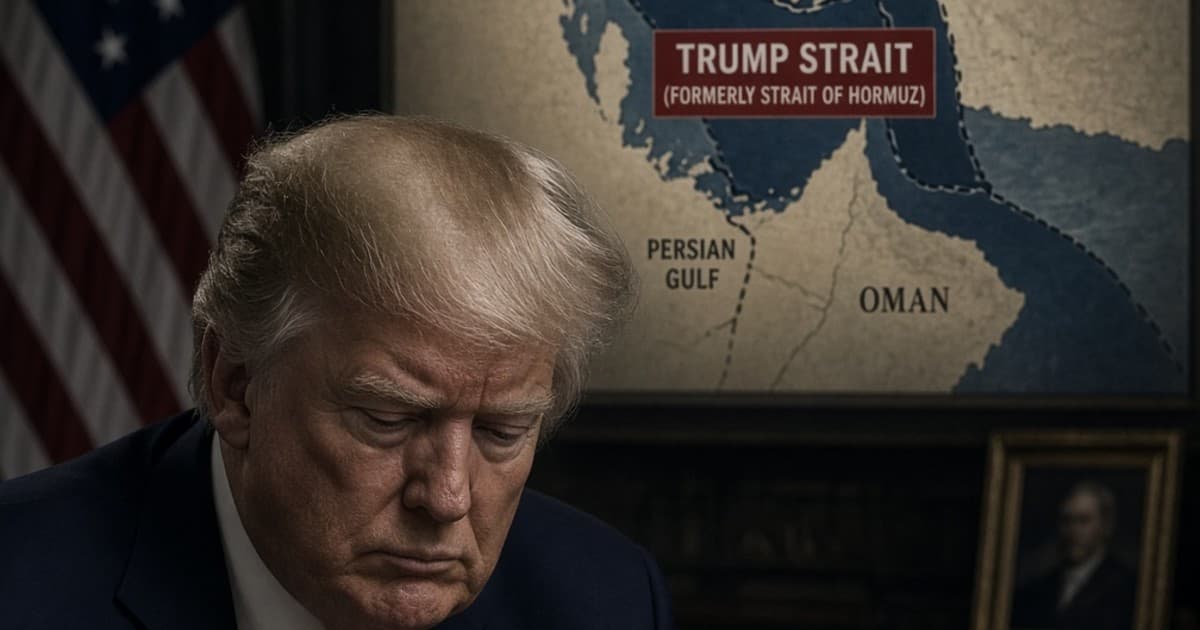
Breaking News
Trump Rejects Iranian Ceasefire, Unveils Map Renaming Strategic Waterway
By The Daily Ledger1 min read3 views
President Trump has rejected an Iranian ceasefire proposal while promoting a map that renames the Strait of Hormuz as the 'Trump Strait,' signaling continued…
President Trump unveiled a revised map of the Middle East on Tuesday that redesignates the Strait of Hormuz as the 'Trump Strait,' a move that came hours after rejecting a ceasefire proposal from Iran.
The renaming initiative appears connected to ongoing maritime tensions in the Persian Gulf region, where the Hormuz Strait serves as a critical passage for global energy supplies. Trump's decision to rebrand the waterway reflects his stated intention to reshape regional geopolitics and assert American influence over strategic chokepoints.
Iranian officials presented what they characterized as a seven-day ceasefire offer, which would have paused hostilities and created space for diplomatic negotiations. The proposal came amid heightened regional instability and concerns from international observers about potential escalation. Trump's swift rejection indicated no willingness to pursue a negotiated pause, with his administration maintaining that its current approach better serves American interests.
The map redisplay suggests a broader strategy of symbolic assertion alongside military posturing. Trump has previously sought to rename other geographic features and public spaces, presenting such actions as marking American leadership and legacy. The Hormuz designation, if formally adopted, would represent an unusually direct assertion of presidential branding on international waterways.
Diplomatic analysts noted that the rejection of Iran's ceasefire offer, combined with the aggressive symbolism of renaming contested territory, signals Trump's administration views negotiation as secondary to demonstrating strength. The timing and presentation of both actions—the map release and ceasefire rejection—amplified the message of continued American assertiveness in the region.
Iran's response to the renaming has not yet been fully articulated, though the country's leadership historically resists what it views as American unilateralism. The developments mark another chapter in the volatile US-Iran relationship, with little apparent opening for diplomatic resolution in the near term.

Comments (0)
No comments yet. Be the first to share your thoughts.
Leave a comment
Comments are reviewed before they appear.