 Breaking News
Breaking News
Trump Promises $5,000 Direct Payment to Every American Adult — If GOP Wins Midterms
By The Daily Ledger2 min read7 views
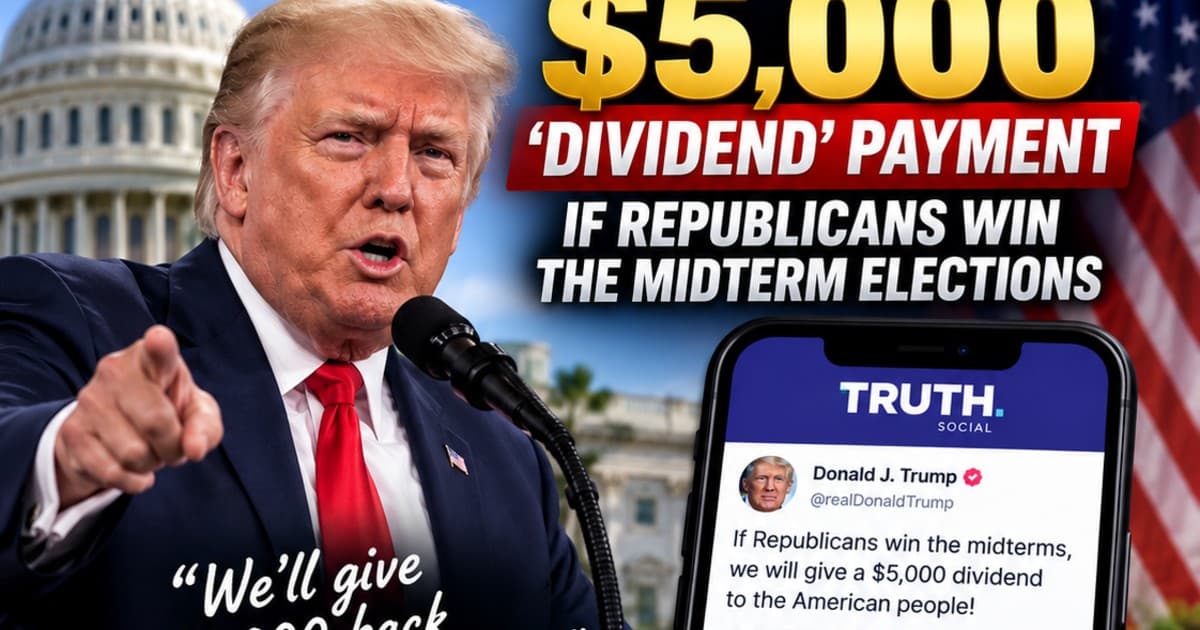
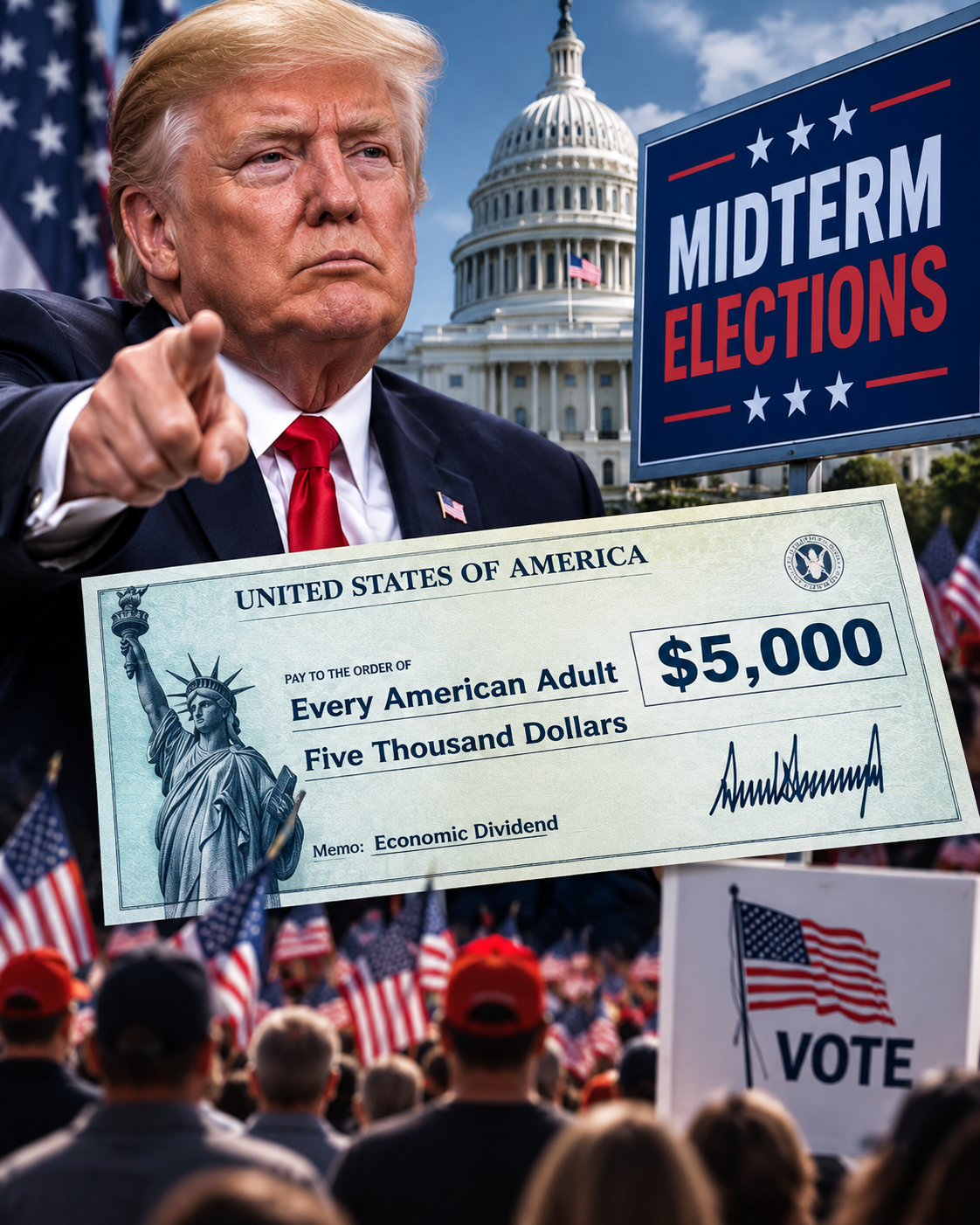
Donald Trump has pledged to deliver a $5,000 payment to every American adult, but only if Republicans secure victory in the upcoming midterm elections.
Trump Pledges $5,000 'Dividend' to All US Adults If Republicans Win Midterms
Former President Donald Trump has promised to deliver a one-time $5,000 payment to every American adult if Republicans win control in the upcoming midterm elections, framing the proposal as a "dividend" owed to citizens from the country's economic gains.
The pledge, made as part of Trump's ongoing midterm campaign efforts, represents one of the boldest direct financial promises of the current election cycle. By framing the payment as a dividend rather than a stimulus check, Trump appeared to draw on the idea that Americans are entitled to a share of national prosperity — a rhetorical approach that distinguishes the proposal from the pandemic-era relief payments many voters received in recent years.
The sheer scale of the proposal invites immediate questions about cost. With roughly 260 million adults in the United States, a universal $5,000 payment would carry a price tag exceeding $1.3 trillion — a sum that would dwarf most federal spending programs and rivals the total annual discretionary budget. No detailed funding mechanism has been outlined publicly, and any such payment would require an act of Congress to authorize and appropriate.
Economists are likely to scrutinize the proposal for its potential effects on inflation and the federal deficit at a time when the national debt already stands at historic levels. Large cash injections into the consumer economy have previously been associated with upward pressure on prices, a concern that critics of the plan are expected to raise.
The political architecture of the promise is also notable. By conditioning the payment on a Republican electoral victory, Trump is explicitly linking a financial benefit to a partisan outcome — a framing designed to motivate turnout and give voters a concrete, personal reason to support GOP candidates up and down the ballot.
Reaction from within Republican ranks has varied, with some allies embracing the message as an energizing campaign tool while questions linger about whether sitting Republican legislators would commit to such a program if returned to power. Democrats have been broadly skeptical, questioning both the seriousness of the proposal and how it would be paid for.
The promise fits within a broader pattern of Trump's economic messaging, which has increasingly centered on the idea that tariff revenues and other government income represent a kind of national profit that should flow back to ordinary Americans. Whether that framework can survive contact with Congressional budget realities remains an open question.
As the midterm campaign intensifies, the $5,000 dividend pledge is likely to remain a flashpoint — celebrated by supporters as visionary economic populism and dismissed by critics as an unfunded campaign-trail pledge with little path to becoming law.

Comments (0)
No comments yet. Be the first to share your thoughts.
Leave a comment
Comments are reviewed before they appear.