 Breaking News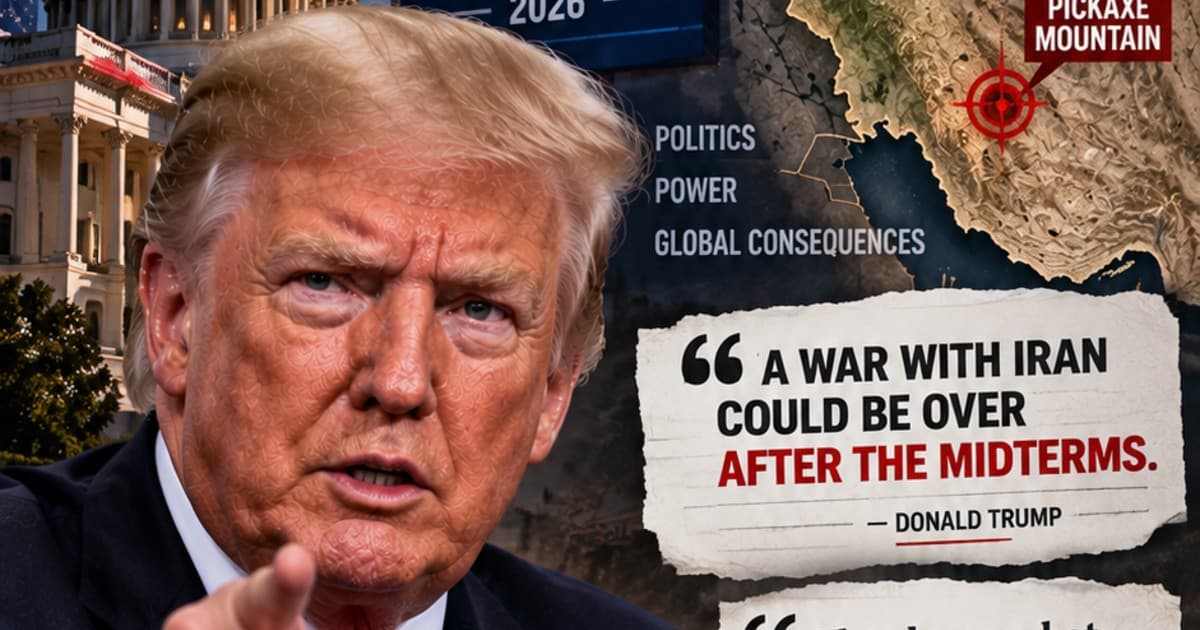
Breaking News
Trump Links Iran Conflict Timeline to Midterm Elections, Threatens Strike on Key Mountain Site
By The Daily Ledger2 min read13 views
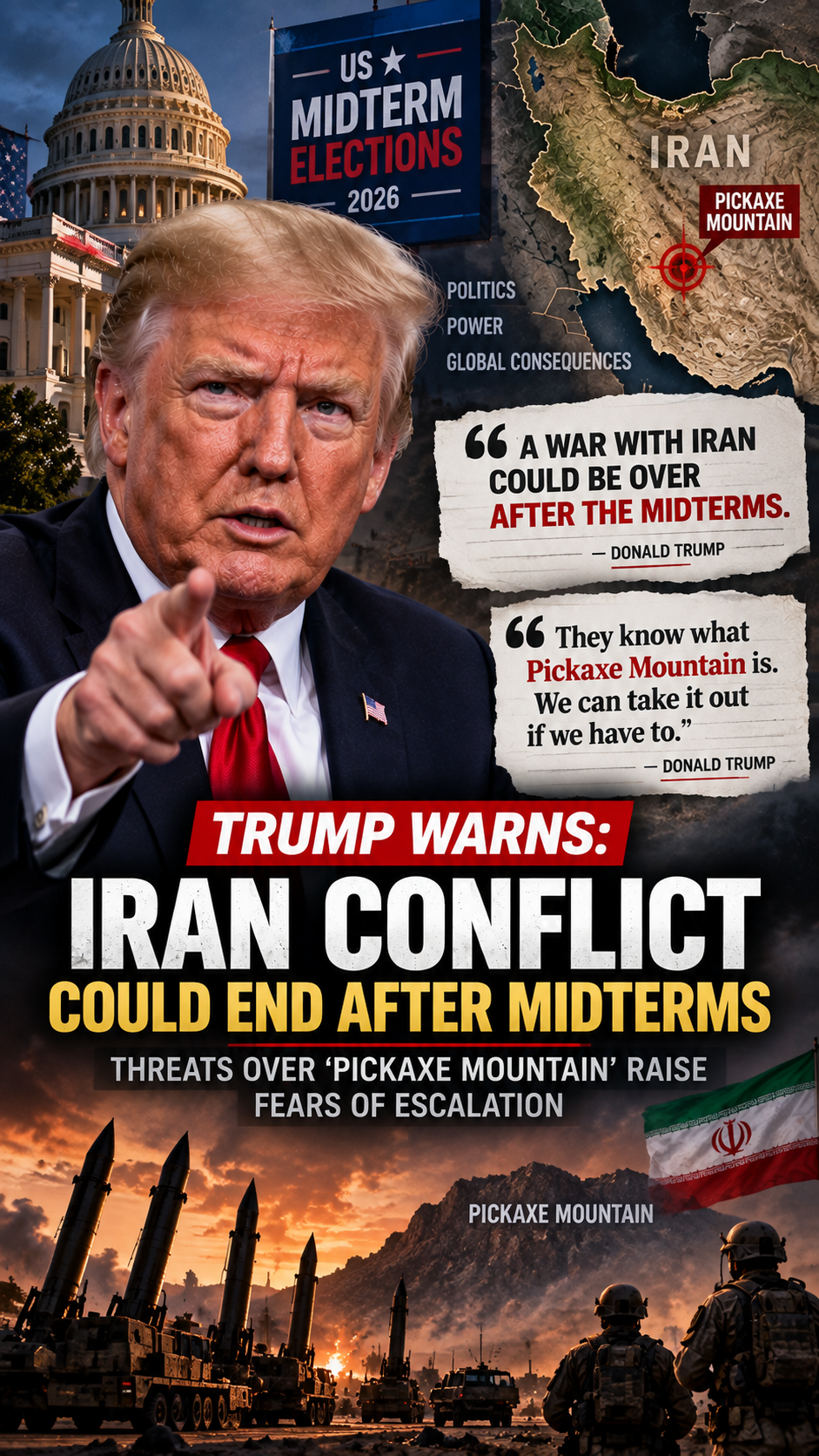
Donald Trump has suggested a war with Iran could end after the US midterm elections while threatening strikes on a site known as Pickaxe Mountain.
Trump Says Iran War to End After Midterms, Threatens Strike on Pickaxe Mountain
Former President Donald Trump has made a pair of striking public statements on the US relationship with Iran, asserting that a war between the two countries could conclude after the upcoming midterm elections while simultaneously threatening to attack a site he identified as Pickaxe Mountain.
The remarks, which quickly drew widespread attention, represent one of the more direct instances of Trump publicly linking the trajectory of a potential armed conflict to the American electoral calendar. Critics and political observers noted that framing military timelines around domestic elections raises serious questions about the role of politics in shaping national security decisions.
Trump has long adopted an assertive rhetorical posture toward Iran, dating back to his first term in office, when tensions between Washington and Tehran reached a peak following the US airstrike that killed a senior Iranian military commander. Since returning to the political stage, he has continued to position himself as a decisive actor on Iran policy, frequently criticizing diplomatic engagement with Tehran and calling for maximum pressure.
The threat directed at Pickaxe Mountain adds a specific and geographically pointed dimension to his remarks. Iran has invested heavily in hardened and underground military infrastructure, including sites embedded in mountainous terrain, in part to protect critical assets from potential airstrikes. A public presidential threat naming a particular location is unusual and is likely to draw scrutiny both from military analysts and from Iranian officials.
US-Iran relations remain deeply strained. Diplomatic efforts centered on reviving a nuclear agreement have stalled, and both sides have exchanged accusations of bad faith. Iran has continued to expand elements of its nuclear program, while the United States and its allies have maintained or tightened sanctions regimes.
Trump's suggestion that hostilities could wind down after the midterms did not come with a detailed explanation of the mechanism or conditions under which that would occur, leaving analysts to speculate about what he was signaling — whether a negotiated outcome, a military resolution, or something else entirely.
Domestically, the statements are certain to become a flashpoint. Democrats are expected to accuse Trump of treating a potential armed conflict as a political variable, while supporters may interpret the remarks as evidence of a president confident enough in his leverage to project a defined endgame.
The international community, including European allies and regional governments, is closely watching US posture toward Iran. Any indication that the United States is moving closer to direct military action — or conversely, toward a political accommodation timed to electoral cycles — has significant implications for the broader strategic balance in the Middle East.
Trump's campaign has not issued additional clarifying statements on the remarks at the time of publication.

Comments (0)
No comments yet. Be the first to share your thoughts.
Leave a comment
Comments are reviewed before they appear.