 Breaking News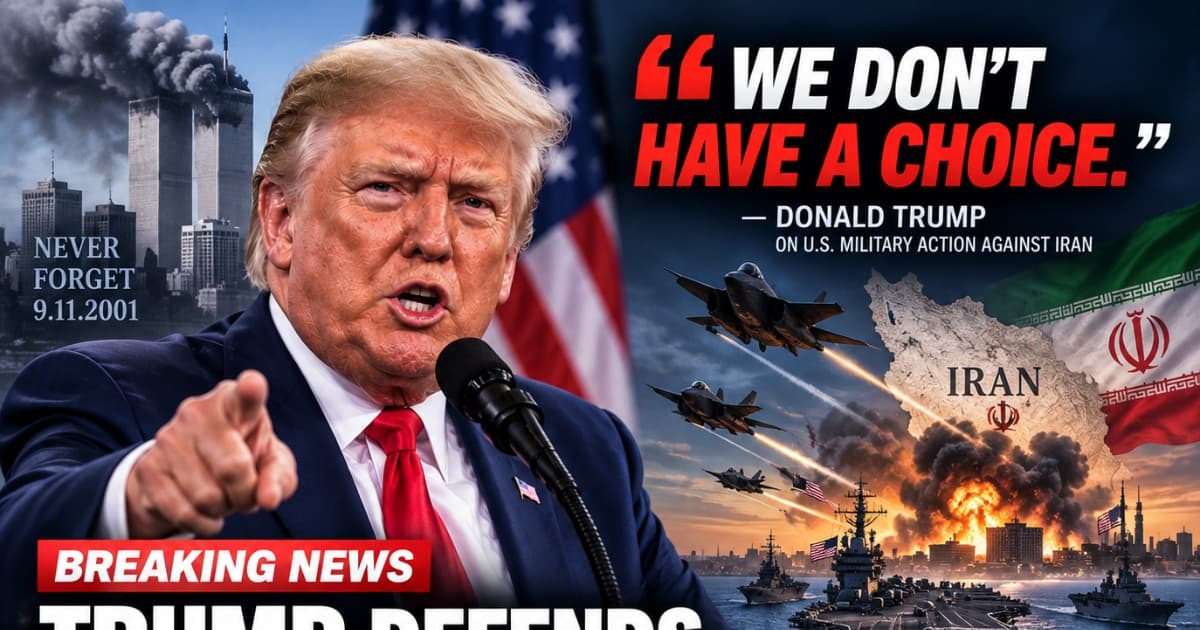
Breaking News
Trump Frames US Action Against Iran as Unavoidable, Draws on Post-9/11 Precedent
By The Daily Ledger3 min read17 views
President Trump defended US military action against Iran as unavoidable, invoking the September 11 attacks to frame the confrontation as a matter of national…
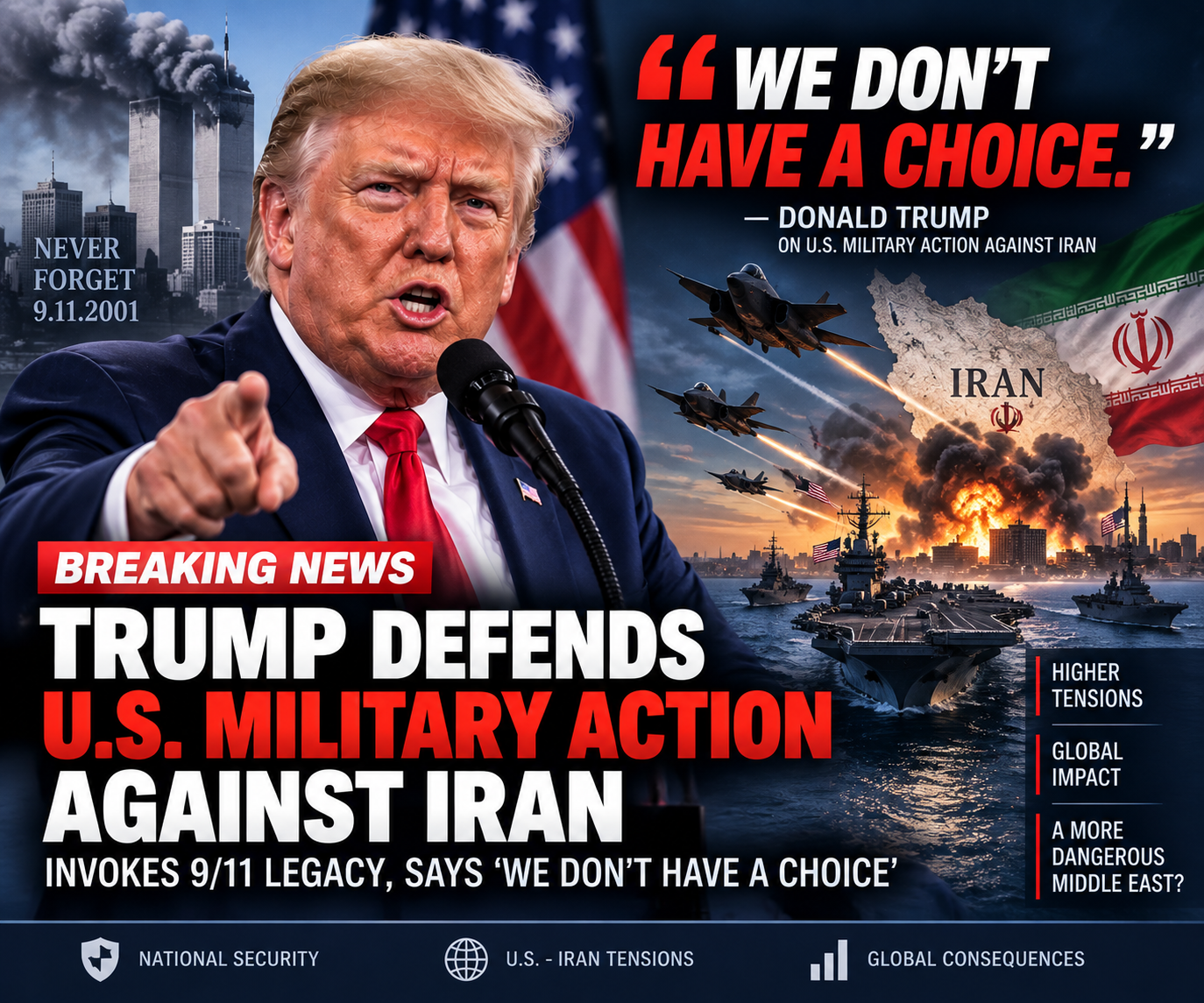
'We Don't Have a Choice': Trump Defends US Action Against Iran, Invokes 9/11
President Donald Trump publicly defended a United States military confrontation with Iran, telling reporters and supporters that America had no alternative but to act. Using language that echoed the post-September 11 national security consensus, Trump framed the decision not as a choice freely made but as an obligation forced on the country by the threat Iran poses.
"We don't have a choice," Trump said, a phrase that carried deliberate weight — positioning the administration's posture as a reluctant but necessary response rather than an act of aggression.
The president drew an explicit line from the September 11, 2001 terrorist attacks to the current confrontation, invoking the memory of that day to build the case that the United States cannot afford to wait while adversaries gather strength. The rhetorical move is a familiar one in American political life: linking a new military action to the nation's most visceral experience of foreign attack lends urgency and moral clarity to decisions that might otherwise face harder scrutiny.
US-Iran tensions have built steadily over years of conflict over Tehran's nuclear ambitions, its support for regional armed groups, and its ballistic missile program. During Trump's first term, relations reached a flashpoint with the targeted killing of a senior Iranian military commander, an act that brought the two countries to the edge of open conflict before both sides stepped back. The resumption of a hardline stance under Trump's return to the presidency has reignited fears of a broader war in the Middle East.
The administration has not shied away from asserting that Iran's nuclear program represents an unacceptable threat. Intelligence assessments have long indicated that Iran has advanced its uranium enrichment significantly, and Trump officials have argued that time for a diplomatic solution is running short.
The 9/11 invocation is also a signal to Congress and to the public about the legal and political framing the White House intends to use. In the aftermath of the 2001 attacks, Congress passed sweeping authorizations for the use of military force that successive administrations stretched to cover operations far beyond their original scope. Critics are already asking whether the current administration intends to rely on existing authorizations or will seek new congressional approval — a battle that would expose deep divisions on Capitol Hill.
International reaction has been divided. Allies in Europe and the Gulf region have urged caution, wary of a regional conflagration that could disrupt energy markets and draw in other actors. Iran, for its part, has signaled that any direct military confrontation would be met with a significant response.
For Trump, the political calculus appears straightforward: casting Iran as an existential danger and himself as the leader willing to confront it reinforces a message of strength that has long been central to his political identity. Whether that message holds if the conflict deepens and costs mount is a question his administration has not yet had to answer.

Comments (0)
No comments yet. Be the first to share your thoughts.
Leave a comment
Comments are reviewed before they appear.