 Breaking News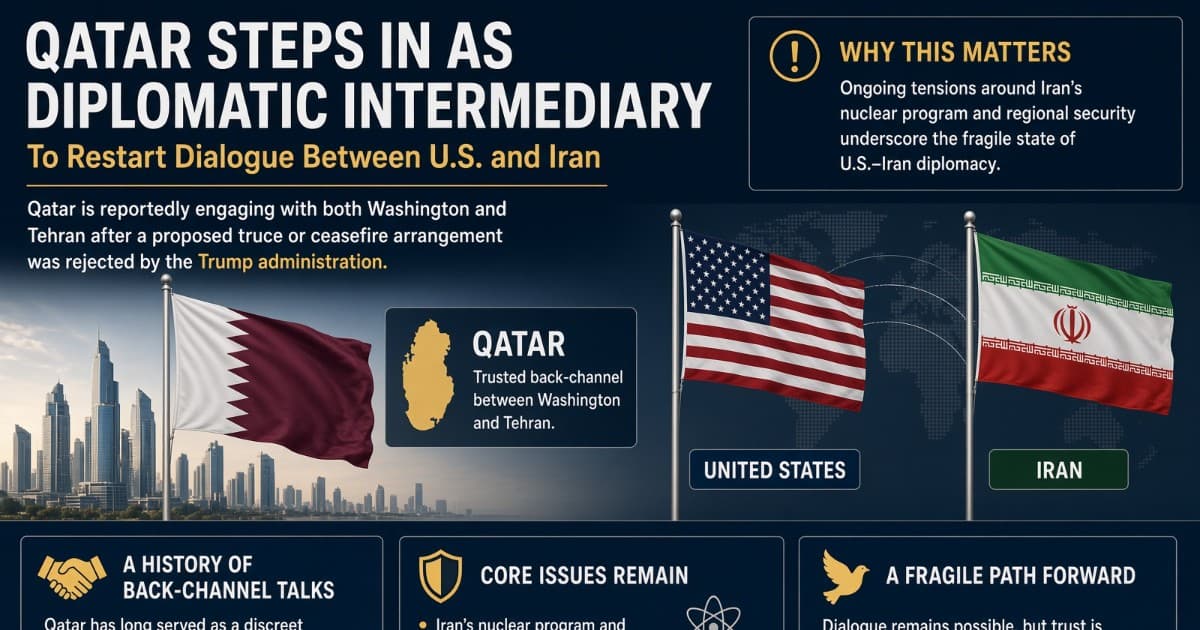
Breaking News
Qatar Steps Into Diplomatic Breach After Trump Rejects Iran Truce Proposal
By The Daily Ledger2 min read4 views
Qatar is working to facilitate fresh dialogue between Washington and Tehran after the Trump administration rejected a proposed truce arrangement with Iran.
Qatar Steps Into Diplomatic Breach After Trump Rejects Iran Truce Proposal
Qatar is working to restart dialogue between the United States and Iran after the Trump administration rejected a proposed truce arrangement aimed at easing tensions between the two longtime adversaries. The effort underscores the continuing demand for a neutral intermediary in one of the world's most consequential diplomatic stand-offs, and it places the small Gulf state once again at the center of high-stakes international diplomacy.
Doha's mediation role is rooted in geography and pragmatism. Qatar maintains warm ties with Tehran, in part because the two nations share a vast offshore natural gas field, while simultaneously hosting one of the largest American military installations in the Middle East. That unusual combination has made Qatar a trusted back-channel for Washington and Tehran across multiple administrations, including in prisoner exchange negotiations and other sensitive indirect contacts.
The Trump administration's rejection of the truce proposal reflects its longstanding skepticism toward diplomatic engagement with Iran absent significant concessions. Since returning to office, President Trump has signaled a preference for pressure over negotiation, a posture consistent with his first-term decision to withdraw from the 2015 nuclear agreement and reimpose sweeping economic sanctions on Tehran. Officials in Washington have generally conditioned any renewed talks on Iran curbing its nuclear enrichment activities, which have advanced well beyond the limits set under the earlier accord.
Iran, for its part, faces its own internal pressures. Hardline factions in Tehran have historically resisted direct engagement with Washington, viewing any talks as a potential concession. The country is also navigating severe economic strain from international sanctions, which could create incentives for diplomacy even as political constraints limit flexibility.
The collapse of the immediate truce effort does not necessarily foreclose further engagement. Qatar's renewed shuttle diplomacy suggests that both sides retain some appetite for indirect communication, even if the conditions for a formal agreement remain elusive. Doha has previously helped broker arrangements between parties who refused direct contact, serving as a message carrier and a space for testing proposals before they become public commitments.
The wider regional picture adds urgency to the effort. Tensions tied to Iran-aligned armed groups across the Middle East, combined with international anxiety over Tehran's nuclear trajectory, have raised the cost of a prolonged diplomatic vacuum. European governments and Gulf neighbors alike have expressed interest in a de-escalation framework, though none have publicly assumed Qatar's front-line mediation role.
Whether Doha's renewed intervention can bridge the distance between Washington and Tehran remains uncertain. Analysts note that successful mediation typically requires both parties to perceive negotiations as preferable to continued confrontation — a calculation that, for now, neither capital appears to have fully made.
##DonaldTrump #TrumpNews #BreakingNews #HotNews #USA #AmericanNews #5000Dollars #StimulusCheck #GovernmentNews #USNews #LatestNews #TrumpAnnouncement #AmericanCitizens #FinancialUpdate #NewsToday
Comments (0)
No comments yet. Be the first to share your thoughts.
Leave a comment
Comments are reviewed before they appear.